

Andrea A. Berry, MD
Associate Professor
Dr. Berry is a board-certified pediatric infectious disease specialist. Her malaria research focuses on the humoral immune response to malaria following natural infection and malaria vaccination, malaria vaccine trials, and controlled human malaria infection studies.

Andrea G. Buchwald, PhD
Assistant Professor
Dr. Buchwald is an infectious disease epidemiologist who is primarily interested in biostatistics and epidemiological methods. Her research focuses on transmission dynamics of infectious diseases and maternal-child health.
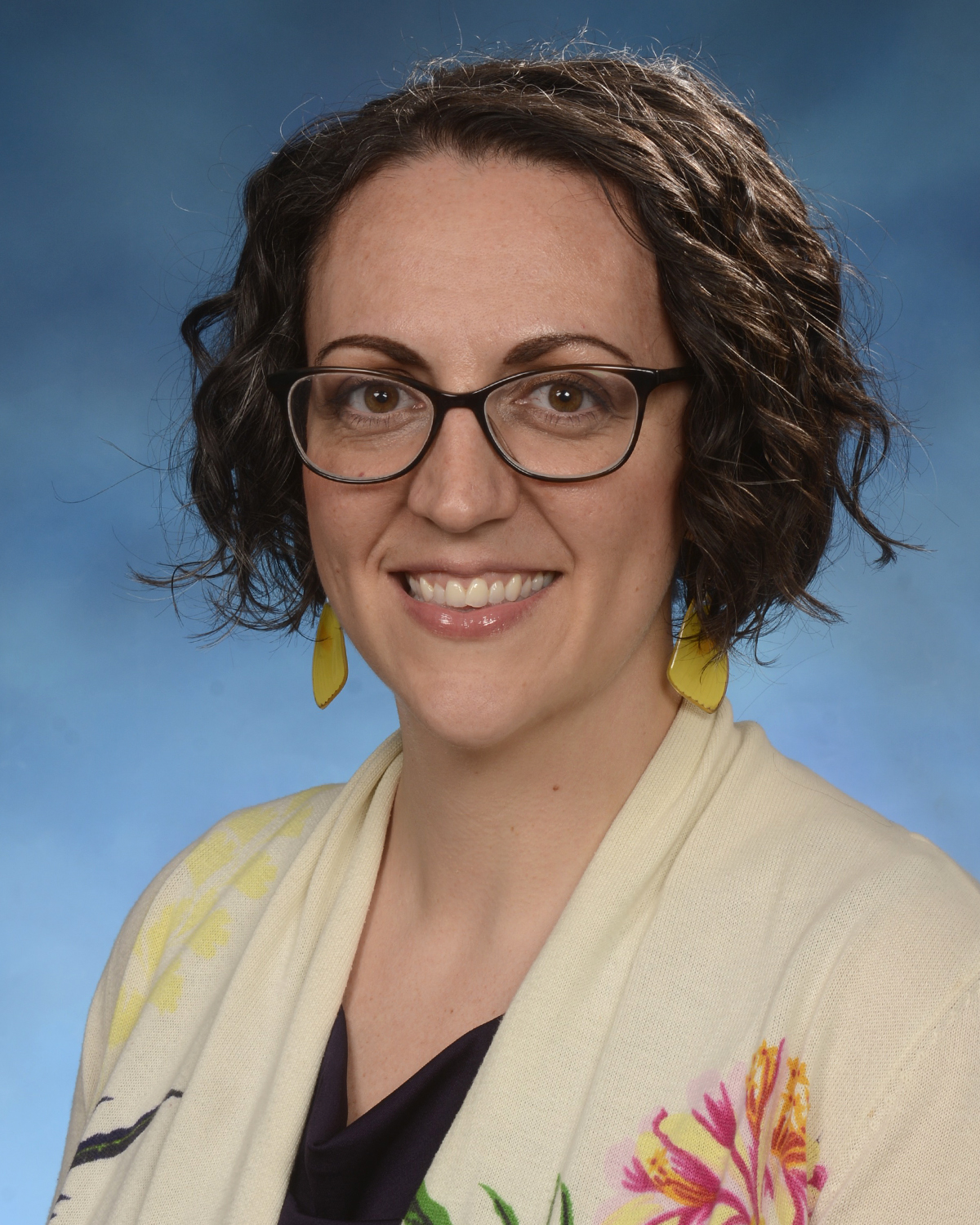
DeAnna Friedman-Klabanoff, MD
Assistant Professor
Dr. Friedman-Klabanoff is a board-certified pediatric infectious disease specialist with a primary research interest in malaria vaccine development and natural and vaccine-induced immunity to Plasmodium falciparum. She conducts vaccine trials for malaria, mosquito-borne diseases, and SARS-CoV-2, and uses peptide arrays to define the fine specificity of antibodies to Plasmodium falciparum pre-erythrocytic proteins.

Bing Guo, PhD, MD, BM
Assistant Professor
Dr. Guo is interested in genomics and population genetics to study human diseases, especially malaria. His current sub-project evaluates the effects of strong selection on the estimation of malaria parasite population structure and demography and explores selection-adjusted strategies to calibrate these estimations, aiming at providing more accurate information to guide targeted malaria control.

Miriam K. Laufer, MD
Adjunct Professor & Volunteer
Dr. Laufer has been conducting epidemiological and translational research focusing on global infectious diseases for 20 years with the goal of translating scientific discovery into clinically relevant strategies to improve health. She leads a multidisciplinary and international team of investigators, trainees, and students in the U.S. and in Africa who are dedicated to developing strategies and tools to support the global effort to tackle infectious diseases. Her team uses molecular, genomic, and immunological approaches to address some of the most pressing challenges in controlling the burden of malaria.

Matt Laurens, MD, MPH
Professor
Dr. Laurens is a pediatric infectious disease specialist with a primary research interest in malaria and other diseases that disproportionately affect vulnerable populations. He conducts clinical studies at the Center for Vaccine Development (CVD) in Baltimore and at international sites in Burkina Faso, Mali, Malawi, and Papua New Guinea. The broad goal of Dr. Laurens’ research is to illuminate the mechanisms of immunity to inform development of vaccines and to investigate promising therapeutics for infectious diseases.

Kirsten E. Lyke, MD
Professor
Co-Director, Malaria Research Program
Dr. Lyke is a clinical translational investigator with recognized expertise in malaria, tropical diseases, and parasite immunology. Dr. Lyke conducts malaria and tropical disease vaccine studies. Dr. Lyke has rebuilt the malaria challenge capabilities at UMB, which has led to novel vaccine work, including the first-in-humans challenge trial of a whole-organism Pf sporozoite malaria vaccine and the first-in-humans aseptic malaria challenge.

Robert S. McCann, PhD
Assistant Professor
Dr. McCann is a medical entomologist with extensive experience conducting research on malaria vectors and parasite transmission using a combination of field, laboratory, and computational approaches. His research focuses on the processes that drive spatial and temporal patterns of malaria with the goal of improving intervention effectiveness. Dr. McCann is currently supported by an IRSDA/K01 career development award from the Fogarty International Center to assess the impact of malaria vector diversity on intervention strategies.

Amed Ouattara, PhD, PharmD, MSc
Assistant Professor
Dr. Ouattara is an Assistant Professor in the Malaria Research Program within the Center for Vaccine Development and Global Health at the University of Maryland, School of Medicine. Dr. Ouattara's research focuses on using diversity-covering approaches that incorporate polymorphisms from various malaria parasite alleles of different proteins into the design of a multivalent malaria vaccine to address the issue of antigen diversity. For this purpose, Dr. Ouattara uses a “reverse vaccinology” approach to prioritize malaria vaccine antigens and, importantly, variants of these antigens based on a systematic evaluation of their genetic diversity and haplotype prevalence in different malaria endemic areas.

Shannon Takala Harrison, PhD
Professor
Co-Director, Malaria Research Program
Dr. Takala Harrison is an epidemiologist with more than 20 years of experience conducting molecular and genomic epidemiological studies of malaria, including studies of natural and intervention-induced selection on Plasmodium genetic diversity, the emergence and spread of resistance to antimalarial drugs and vaccines, and parasite population demography to inform malaria elimination strategies. She enjoys working with students and faculty through her roles in the Program in Epidemiology and Human Genetics and the Women in Medicine and Science organization at UMSOM. Dr. Takala Harrison was recently appointed as an advisor for the Center for Advanced Research Training & Innovation (CARTI), where she is assisting with the development, execution, and evaluation of the CARTI Research Training Tracks.

Mark A.Travassos, MD, MSc
Associate Professor
Dr. Travassos is a pediatric infectious diseases specialist and member of the Center for Vaccine Development and Global Health's Malaria Research Program. His research focuses on malaria pathogenesis and epidemiology, with a focus on cerebral malaria and other forms of severe malaria.
Affiliate Faculty
Cristiana Cairo, PhD
Assistant Professor of Medicine, Microbiology and Immunology
Joana Carneiro da Silva, PhD
Professor of Microbiology and Immunology
Timothy D. O'Connor, PhD
Associate Professor of Medicine
David Serre, PhD
Professor of Microbiology and Immunology