

Human Genomics: Population-Scale Genomics for Understanding Disease Mechanisms
IGS researchers apply systems-level approaches to understand how biological variation contributes to human health and disease. Our work integrates large-scale genomic, transcriptomic, epigenomic, and clinical datasets to characterize the structure and dynamics of complex biological systems across populations, tissues, and cellular states. By combining statistical genetics, computational biology, machine learning, and software engineering, we develop scalable analytical frameworks that transform heterogeneous multiomic measurements into mechanistic insight. These approaches enable the identification of molecular pathways, cellular processes, and evolutionary forces that shape disease susceptibility, progression, and therapeutic response. Building on this integrative foundation, IGS investigators develop complementary approaches that connect genomic variation to disease mechanisms across multiple biological systems.
As an organization, we emphasize integrative analysis across scientific disciplines, recognizing that complex diseases emerge from interactions among genetic variation, environment, and biological networks. Our faculty develop novel algorithms, interoperable data resources, and reproducible computational workflows that support discovery in cancer biology, neuroscience, microbiome research, and population health. Notable focuses include structural variation, population genetics, statistical genomics, evolutionary modeling, and functional genomics.
Through collaborative research programs and shared computational infrastructure, IGS enables investigators to form predictive models of disease mechanisms, advancing precision medicine and improving representation of populations in genomic research. Together, these investigators develop computational and analytical strategies that enable integration of population-scale genomic data with functional measurements, producing mechanistic insight into how genomic variation influences disease biology. Leadership of Timothy O’Connor, PhD, as Co-Leader of the Program in Health Equity & Population Health ensures application of these methods to advance health equity throughout our medical school.
Human & Population Genomics Faculty

Victor Borda, PhD
Research Associate, Medicine
Dr. Borda combines different fields (archaeology, anthropology, and genetics) to answer the question: How have evolutionary and demographic factors shaped the present-day genetic diversity of human populations? His research incorporates several statistical genetic analyses to understand the recent dynamics of Latin American populations to begin to understand the architecture of complex characteristics and work towards eliminating disparities and understanding the diversity that makes us human.
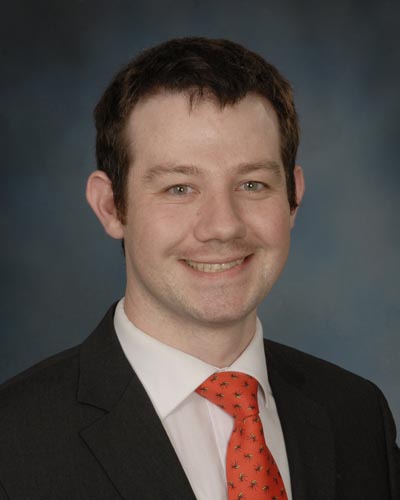
Timothy O'Connor, PhD
Associate Professor, Medicine
Co-Director, Program in Health Equity & Population Health
Dr. O'Connor studies population genetics and genetic epidemiology of underrepresented populations, including African Americans and Latin Americans. The O’Connor Lab researchers work with large-scale genomic data, including the Trans-Omics for Precision Medicine (TOPMed) Project, where Dr. O’Connor co-convenes the population genetics working group tasked with generating flagship papers for the project, and the Genetics of Latin American Diversity (GLAD) Project, where he is the lead PI. The goal of the GLAD project is to collect, combine, and curate all existing samples from Latin American subjects, which will be publicly available through innovative technologies that preserve individual consent.

Dr. Shutta’s research encompasses two complementary themes: methods development for network modeling of multiomic data and the use of these methods to explore molecular changes in pulmonary health throughout the lifecourse. The combination of genetic background and lived experiences determine trajectories of lung health and disease that are unique to each individual. Dr. Shutta’s work focuses on understanding how and why these trajectories diverge at the molecular level and how these divergences lead to differential disease risk, with the end goal of identifying effective strategies to promote healthy lung aging and reduce morbidity and mortality of age-related pulmonary disease.
Additional Faculty Working in Human Genomics:
Bioinformatics & Computational Biology
Center for Advanced Microbiome Research & Innovation
Cancer Genomics
Microbial Systems
Neurogenomics