
Weekly Conferences
Fellows partake in several conferences, including, but not limited to the following:
Introductory Curriculum Series
During the first two months of the academic year, fellows will have conference three times weekly going over introductory lectures for renal physiology, electrolyte management, and dialysis basics and complications. This is meant to reinforce concepts learned during their internal medicine training as well as prepare them as they start their fellowship training.
Core Curriculum Series
Once-weekly conferences held on Friday which focus on all aspects of nephrology practice, as well as renal physiology and other topics. The fellowship has a curriculum spread across the two years which covers all areas included in the ABIM Nephrology board examination.
Renal Grand Rounds
Renal Grand Rounds is a weekly conference dedicated to learning about new developments in clinical nephrology or advances in the basic or clinical science of nephrology. Speakers are drawn from the Division of Nephrology or other Divisions and Departments within the University of Maryland. We also host distinguished guest speakers from other academic institutions. Topics range from molecular and cellular mechanisms of renal function or disease to clinical aspects of general and transplant nephrology.
Journal Club
The nephrology journal club is a forum for discussion of new and important research in nephrology and related scientific fields. These conferences are held during the third Wednesday of the month. Trainees present a clinical or basic science paper under the guidance of a faculty member. Through this experience trainees learn to critically evaluate research articles with the guidance of experienced faculty.
Renal Pathology Conference
To be able to interpret renal pathology proficiently and understand clinical pathologic correlations, the fellows have intense exposure to renal pathology. They attend weekly Transplant Biopsy Meetings on Fridays and monthly Native Kidney Biopsy Meetings on Wednesdays. In the former, all the kidney and pancreas transplant biopsies of the week are reviewed and discussed in a multidisciplinary fashion. In the latter, the interesting native renal biopsies, either performed in the Medical Center or referred from community nephrologists, are reviewed in detail by our in-house renal pathologist and discussed by the nephrology faculty. Our renal pathologist is also available to discuss cases “one-on-one” as needed.
Case Conference/Morbidity and Mortality Conference
Fellows will have the opportunity to discuss various cases to further develop their critical thinking and management skills. Cases will be presented on a monthly basis and reviewed under faculty guidance. They will also serve as an opportunity to review complex cases and help improve the quality of care provided.
National Conferences
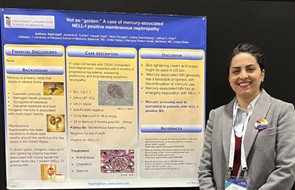
Fellows are supported to attend national conferences during their time at the University of Maryland. Each fellow is provided an educational stipend for $500 during their first year and $2500 during their second year of training (total of $3000 during two-year training period). All first-year fellows attend the Annual Mid-Atlantic Kidney Boot Camp at the start of their fellowship. First-year fellows also attend NKF Spring Clinical Meetings and second-year fellows attend ASN Kidney Week. We provide added support for fellows interested in other conferences during their second year of training.
- Mid-Atlantic Annual Kidney Boot Camp – 1st year Fellows
- National Kidney Foundation (NKF) Spring Clinical Meetings – 1st year Fellows
- American Society of Nephrology (ASN) Kidney Week – 2nd year Fellows
- National Business Leadership (NBLU) – 2nd year Fellows
- Home Dialysis University (HDU) – 2nd year Fellows
- American Transplant Congress (ATC) – 2nd year Fellows
Other Educational Experiences
In addition to scheduled conferences, fellows have monthly business meetings which examine and constantly work to improve the fellowship experience; periodic mortality and morbidity conferences; point of care ultrasound (POCUS) training; clinical simulation training including procedural training in kidney biopsies; and opportunities for teaching medical students in small group environments.