
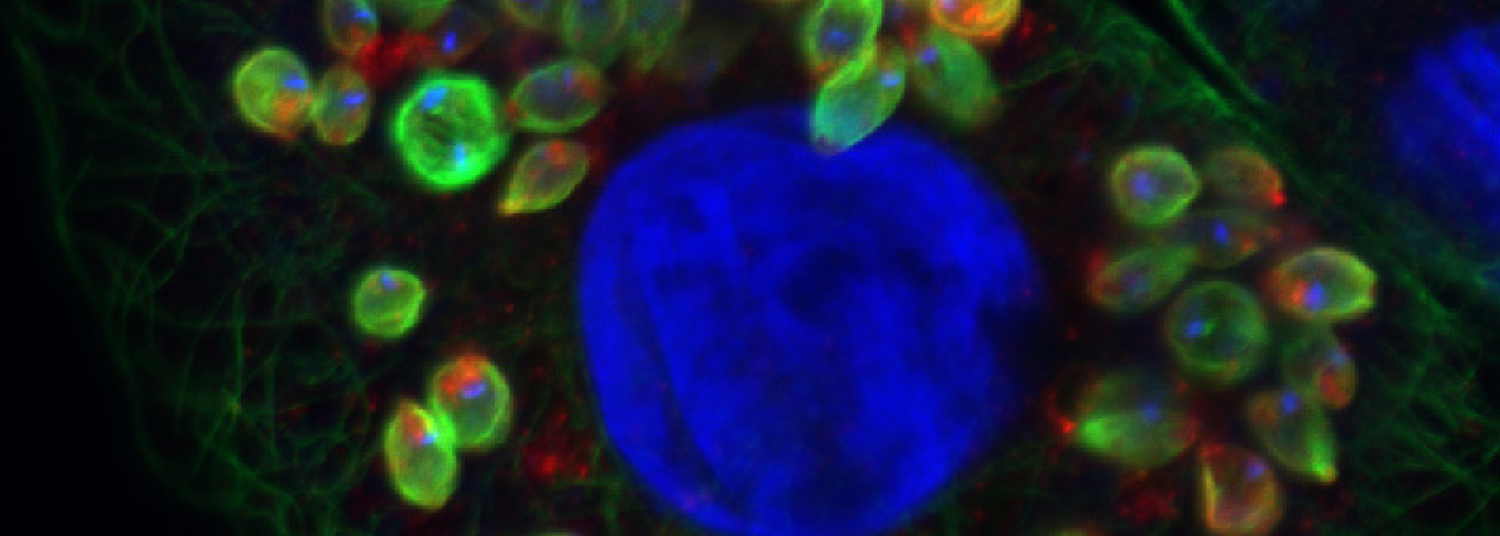
IGS Researchers Use Multiomics to Investigate Microbial Genomics & Infectious Diseases
Our faculty studies bacterial, parasitic, and fungal pathogens across interconnected human, animal, vector, and environmental systems. They investigate microbial and multicellular pathogens using multiomics to better understand how organisms and populations respond to selective pressures and external stimuli, such as drugs, vaccines, the host's immune system, and the presence of other organisms.
Our scientists research host-microbe interactions, characterizing molecular interactions between them, to identify determinants of pathogenesis. Their research uses genomics, transcriptomics, and comparative analysis to identify disease phenotypes, novel approaches to control chronic and invasive infections, and track evolution and variation in species.
In addition, their studies employ a variety of state-of-the-art techniques, such as epi-transcriptomics, multiomics sequencing in single nuclei, spatial transcriptomics, dual-species transcriptomics, single-cell proteomics, immuno- and phospho-proteomics, molecular assays, and various infection models.
These advanced methods allow our researchers to track vulnerabilities across global populations, such as drug resistance, vaccine efficacy, and ways to prevent and control emerging pandemics.
Microbial Systems Faculty

Dr. Bruno's research focuses on obtaining a molecular understanding of how fungi interact with human cells to identify novel therapeutic targets to treat invasive fungal infections—for which very few effective therapies exist. The lab team uses a combination of in vivo animal models, in vitro models, transcriptomics, proteomics, molecular microbiology, and genetics to explore how pathogenic fungi invade airway epithelial cells and avoid being cleared by the immune system.

Dr. Silva's research contributes to the fight against malaria and other infectious diseases through analytical approaches. She uses evolutionary genetics and genomics to conduct translational studies in infectious diseases, especially those caused by parasites. Her research uses principles and methodologies of population genetics and comparative genomics to study the evolutionary forces that have shaped the composition and organization of genomes and the structure and dynamics of microbial populations.

Dr. Dumetz studies Leishmania parasites--transmitted by sand flies--that cause leishmaniasis, a disease that ranges from skin ulcers to life-threatening infections. Current reatment options toxic, costly, and increasingly affected by resistance. The parasites rewire immunity and metabolism to survive inside host macrophages. Unlike most eukaryotes, Leishmania relies heavily on post-transcriptional gene regulation. Dr. Dumetz uses it as a model to study RNA secondary structures and their role in translation control, combining RNA-sequencing approaches with molecular validation to identify parasite vulnerabilities and advance new therapeutic strategies.

Dr. Dunning Hotopp's research focuses on understanding the rules of life as they pertain to genomes and transcriptomes in multi-organismal systems with the goal of developing new ways to improve human health. Her research concentrates on three main areas: lateral/horizontal gene transfer between bacteria and eukaryotes; genomics of Brugia/Wolbachia interactions; and the development of methods to improve systems-level research in host/microbe interactions.
Dr. Serre develops novel genomic approaches to study infectious diseases and to address outstanding biological questions that cannot be easily studied with classical molecular biology approaches. His lab is interested in understanding the molecular and cellular interactions between eukaryotic parasites and their hosts, with a primary focus on Plasmodium vivax, a parasite that causes malaria. His studies use a variety of state-of-the-art genomic assays—including whole genome sequencing, high-throughput genotyping, dual RNA-seq, single cell RNA-seq, and spatial transcriptomics—to analyze samples from malaria patients, animal models, and in vitro cultures.
 Hervé Tettelin, PhD
Dr. Tettelin's research uses ilarge-scale comparative and functional genomics approaches to study host-pathogen interactions and identify novel targets for the development of vaccines or therapeutics. His lab also develops bioinformatics tools or pipelines to achieve these goals. Dr. Tettelin—in collaboration with the group of Dr. Rino Rappuoli at GSK Vaccines—pioneered the fields of reverse vaccinology and pangenomics. Reverse vaccinology uses genomics to identify novel protein candidates for vaccine development. His group first applied it to Neisseria meningitidis, resulting in the commercialization of the 4CMenB (Bexsero®) vaccine. Pangenomics characterizes of the genomic content of an entire species far exceeding knowledge from the genome content of any individual isolate.