
Global Study of Microbes in 60 Cities Finds Each Has Unique Fingerprint of Viruses and Bacteria
June 09, 2021 | Deborah Kotz
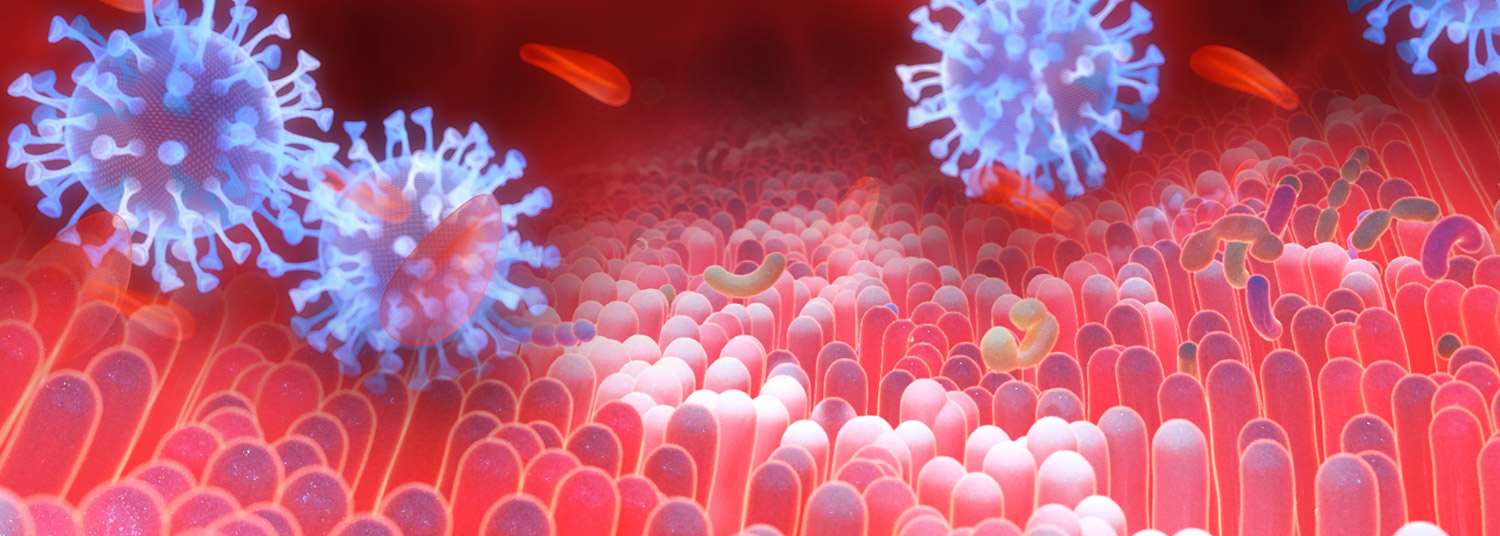
Researchers turn now to see how COVID-19 pandemic affected microbiome in each city
 Each city has its own unique microbiome, a “fingerprint” of viruses and bacteria that serves as type of city profile, according to a new study from an international consortium of researchers that included a team from the University of Maryland School of Medicine (UMSOM). The international project, which sequenced and analyzed samples collected from public transit systems and hospitals in 60 cities around the world, was published today in the journal Cell.
The research is considered to be the largest-ever global metagenomic study of urban microbiomes, spanning both the air and the surfaces of multiple cities. It features a comprehensive analysis for all the microbial species identified—including thousands of viruses and bacteria and two newly identified single-cell organisms not found in reference databases.
Study co-author Lynn Schriml, PhD, UMSOM Associate Professor in the Department of Epidemiology & Public Health and Scientist at the Institute for Genome Sciences (IGS), led the study sampling efforts for Baltimore's transit systems. “Baltimore's distinct microbial signature reveals a unique, fascinating, and diverse world, providing insights into geographical variation and previously unknown microbial genomes,” she said.
 Added study senior author Christopher Mason, PhD, a professor at Weill Cornell Medicine and the director of the WorldQuant Initiative for Quantitative Prediction: “Every city has its own ‘molecular echo’ of the microbes that define it. If you gave me your shoe, I could tell you with about 90 percent accuracy the city in the world from which you came.”
The study was conducted before the COVID-19 pandemic shut down cities throughout the world, so the researchers are now looking at how the pandemic affected the microbiome fingerprint of each city. “It’s a good question,” Schriml said, “and we are addressing this in follow-up research.” The consortium launched the MetaCOV project in 2020 to investigate the change in urban metagenomes and isolate the presence of the SARS-CoV-2 virus (the virus that causes COVID-19) in urban environments (e.g. ATM machines, wastewater, hospitals, transit systems).
Findings in the latest research are based on an analysis of 4,728 samples from cities on six continents, taken over the course of three years, and represent the first systematic worldwide catalogue of the urban microbial ecosystem. In addition to distinct microbial signatures in various cities, the analysis revealed a core set of 31 species that were found in 97 percent of samples across the sampled urban areas. The researchers identified 4,246 known species of urban microorganisms, but they also found that any subsequent sampling will still likely continue to find species that have never been seen before, which highlights the raw potential for discoveries related to microbial diversity and biological functions awaiting in urban environments.
In the future, the findings also have many potential practical applications, including identifying potential new compounds that can be used as antibiotics and small molecules annotated from biosynthetic gene clusters (BGCs) that have promise for drug development.
Dr. Schriml joined the International Metagenomics and Metadesign of Subways and Urban Biomes (MetaSUB) consortium in 2016 to gain greater insight on urban built environments through studying the composition and variation of microbes across Baltimore and Washington D.C. mass transit systems. The MetaSUB consortium has expanded since then to include projects sampling diverse built environments, including sewers, monuments and hospitals with Dr. Schriml sampling biofilms on the Orpheus Monument at Fort McHenry and the Soldiers' National Monument at Gettysburg in 2018. She had been joined by study co-author Emmanuel Mongodin, PhD, former Assistant Professor of Microbiology and Immunology at UMSOM and IGS faculty member. Last year, he left the UMSOM to become a program director at the National Heart, Lung, and Blood Institute.
“This is a fascinating study, and it is fitting that our researchers played an integral role in identifying the microbiome fingerprint of Baltimore,” said E. Albert Reece, MD, PhD, MBA, Executive Vice President for Medical Affairs, UM Baltimore, and the John Z. and Akiko K. Bowers Distinguished Professor and Dean, University of Maryland School of Medicine. “Basic research is at the core of our medical school mission and using the information we glean will be crucial for improving our global health in the future.”
Cell, Danko et al.: “A global metagenomic map of urban microbiomes and antimicrobial resistance” https://www.cell.com/cell/fulltext/S0092-8674(21)00585-7 DOI: 10.1016/j.cell.2021.05.002
About the University of Maryland School of Medicine
Now in its third century, the University of Maryland School of Medicine was chartered in 1807 as the first public medical school in the United States. It continues today as one of the fastest growing, top-tier biomedical research enterprises in the world -- with 46 academic departments, centers, institutes, and programs, and a faculty of more than 3,000 physicians, scientists, and allied health professionals, including members of the National Academy of Medicine and the National Academy of Sciences, and a distinguished two-time winner of the Albert E. Lasker Award in Medical Research. With an operating budget of more than $1.2 billion, the School of Medicine works closely in partnership with the University of Maryland Medical Center and Medical System to provide research-intensive, academic and clinically based care for nearly 2 million patients each year. The School of Medicine has nearly $600 million in extramural funding, with most of its academic departments highly ranked among all medical schools in the nation in research funding. As one of the seven professional schools that make up the University of Maryland, Baltimore campus, the School of Medicine has a total population of nearly 9,000 faculty and staff, including 2,500 students, trainees, residents, and fellows. The combined School of Medicine and Medical System (“University of Maryland Medicine”) has an annual budget of over $6 billion and an economic impact of nearly $20 billion on the state and local community. The School of Medicine, which ranks as the 8th highest among public medical schools in research productivity (according to the Association of American Medical Colleges profile) is an innovator in translational medicine, with 606 active patents and 52 start-up companies. In the latest U.S. News & World Report ranking of the Best Medical Schools, published in 2021, the UM School of Medicine is ranked #9 among the 92 public medical schools in the U.S., and in the top 15 percent (#27) of all 192 public and private U.S. medical schools. The School of Medicine works locally, nationally, and globally, with research and treatment facilities in 36 countries around the world. Visit medschool.umaryland.edu
Contact
Deborah Kotz
410-706-4255
dkotz@som.umaryland.edu
Related stories
Wednesday, May 29, 2019
The Human Microbiome Project expands the toolbox for studying host and microbiome interactions
New studies provide a framework for future studies of the role of the microbiome in health and disease.