
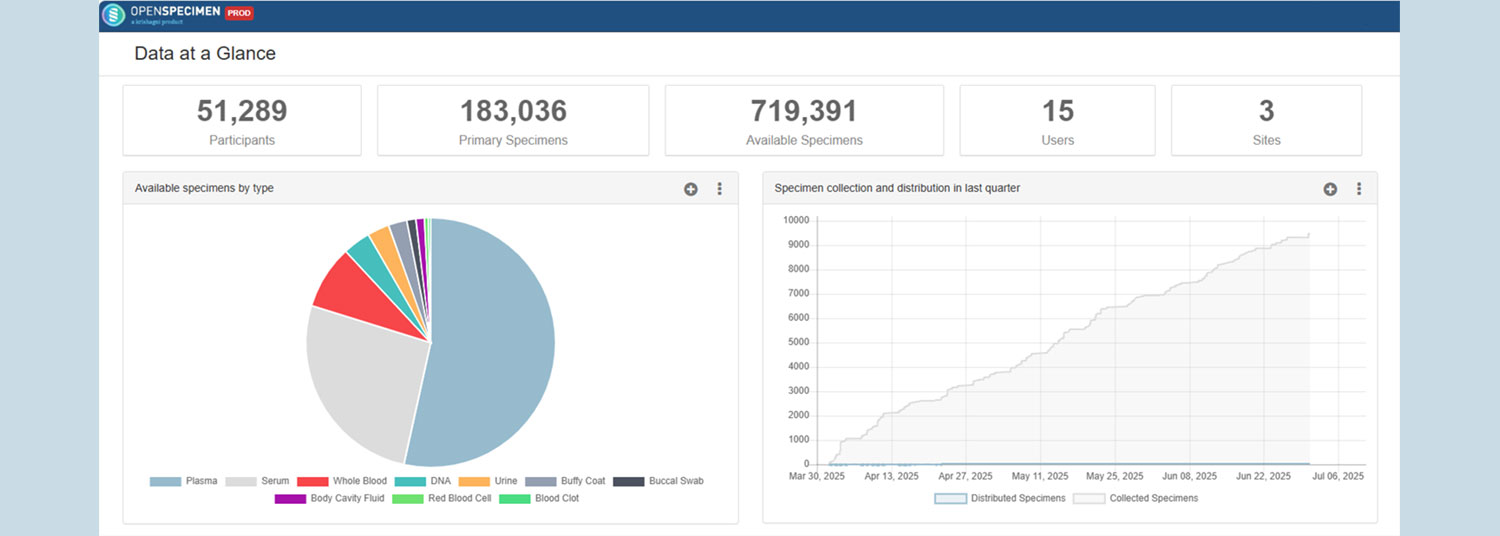
Specimens Stored in Our Biorepository
What We Store
- Types of Specimens: Peripheral blood mononuclear cells (PBMCs), plasma, serum, DNA, RNA, tissue samples, and more.
- Storage Conditions: Specimens are stored under optimal conditions, including -80°C freezers and liquid nitrogen tanks, to preserve sample integrity.
- Linked Data: Each specimen is associated with detailed metadata, including collection protocols, patient demographics, and clinical annotations.
How We Use OpenSpecimen
- Real-Time Tracking: Every specimen is barcoded and tracked from collection to storage, ensuring full chain-of-custody documentation.
- Data Integration: OpenSpecimen integrates with clinical databases to provide researchers with comprehensive datasets.
- Request Management: Researchers can request specimens through a streamlined workflow, with automated approvals and fulfillment tracking.
Specimens Stored at Other Institutions
In addition to managing our internal collections, we offer external institutions the ability to store specimens within their own designated spaces while maintaining full oversight and access. This empowers researchers to efficiently manage their biospecimens, maintain data integrity, and accelerate translational research without compromising control or compliance.
How OpenSpecimen Supports External Collections
- Centralized Data Access: Researchers can view, and request specimens stored at partner sites through a unified OpenSpecimen interface.
- Compliance & Consent Tracking: OpenSpecimen ensures that all specimens meet ethical and regulatory standards, including consent documentation.
- Cross-Institutional Collaboration: Facilitates data harmonization and sharing for multi-site studies, enabling broader scientific impact.