
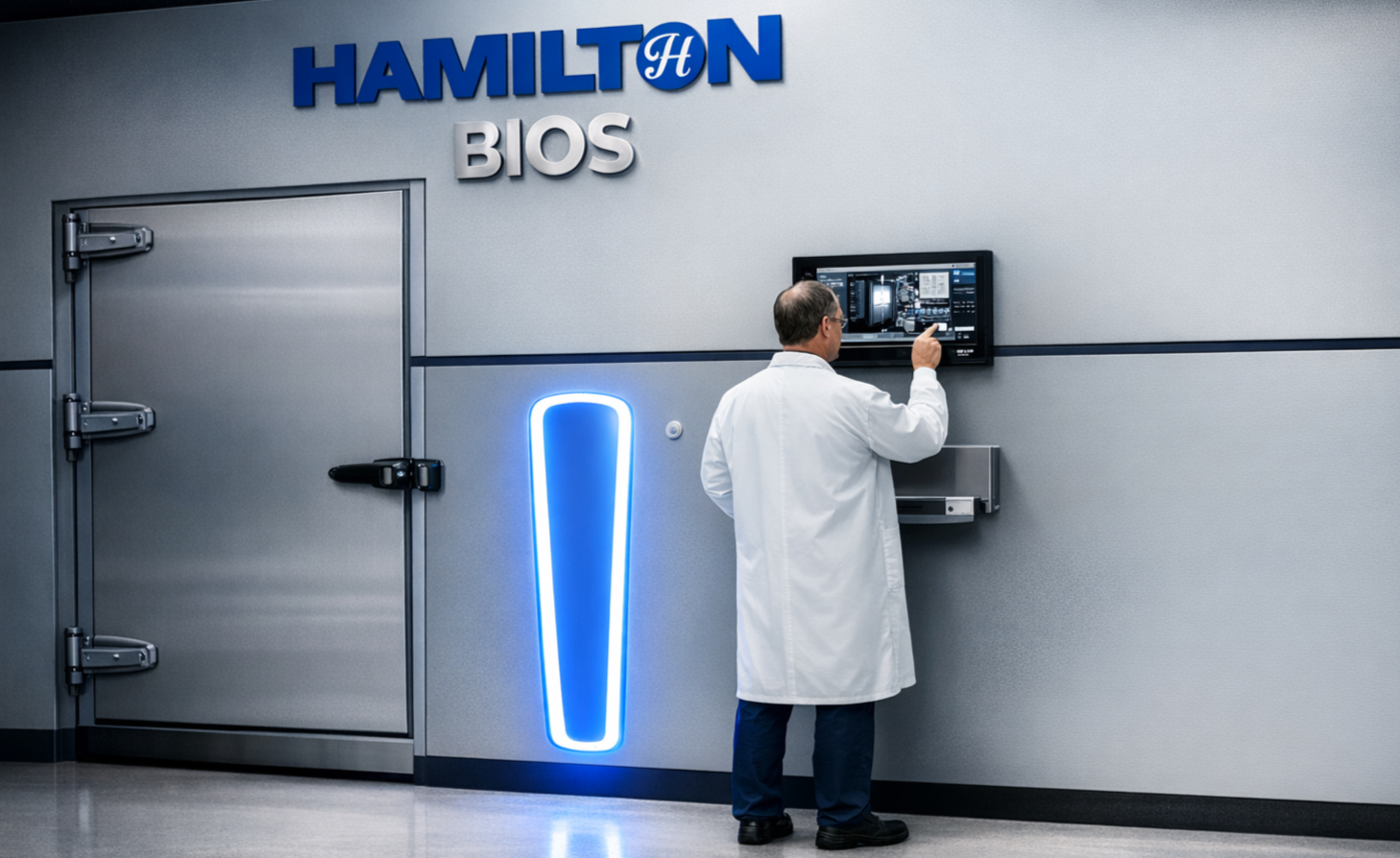
The UMB Biobank provides secure, scalable, and rigorously monitored biospecimen storage solutions designed to preserve sample integrity across a wide range of specimen types. Our storage infrastructure supports ultra-low temperature and cryogenic environments, automated retrieval, and full chain-of-custody tracking in alignment with ISBER best practices.
These controlled storage systems minimize pre-analytical variability, reduce unnecessary freeze–thaw events, and protect the long-term scientific value of biospecimens used in clinical, translational, and population-based research.
Storage Capabilities
Automated Ultra-Low Temperature Storage (–80 °C)
High-capacity automated freezer systems provide secure, temperature-controlled storage for large biospecimen collections. Robotic sample retrieval minimizes handling and environmental exposure while supporting rapid and accurate access.
- Robotic sample handling to reduce freeze–thaw cycles
- High-density storage for large-scale studies
- Integrated barcode verification
- Real-time inventory synchronization
Cryogenic Vapor-Phase Liquid Nitrogen Storage (< –150 °C)
For biospecimens requiring deeper cryogenic preservation, the Biobank maintains vapor-phase liquid nitrogen storage environments designed to support cellular viability and molecular integrity.
- Vapor-phase LN2 storage to reduce contamination risks
- Preservation of PBMCs, viable cells, and sensitive derivatives
- Continuous environmental monitoring
Monitoring, Redundancy, and Traceability
All storage environments are supported by continuous temperature monitoring, alarmed alert systems, and infrastructure redundancy to protect biospecimen integrity. Barcode-based inventory management enables complete chain-of-custody tracking from receipt through long-term storage and retrieval.
- 24/7 temperature monitoring with automated alerts
- Emergency response and backup systems
- Audit-ready traceability and access controls
Quality and Operational Standards
Biospecimen storage operations are governed by standardized operating procedures and quality management practices consistent with ISBER recommendations and institutional compliance requirements. Storage platforms are integrated with specimen management systems to ensure transparency, reproducibility, and long-term operational sustainability.