
Viral Evasion of Innate Immunity
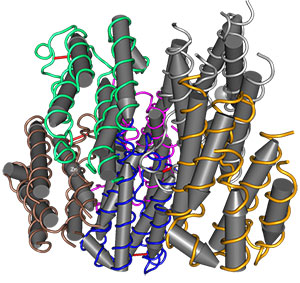
Nevit Dilmen, CC BY-SA 3.0, via Wikimedia Commons

Slightly over 50 years ago, Isaacs and Lindenmann discovered Interferons — biological molecules with anti-viral properties produced by the host upon exposure to virus. Since then we have learned a lot about different types of interferons (IFN), their mode of actions and the genes they turn on to protect cells from virus infection. But, till early 2000, it was unclear how cells actually sensed the virus. One very unique viral component — dsRNA, was known to induce IFNs, but again the mechanism was scant at best.
Discovery of TLR3 followed by TLR7, TLR8, RIG-I and their signaling pathways shed new light in the ways viral nucleic acids are recognized by the host cells. In order to protect the host from viral invasion, the innate immune system has evolved sensors to detect the viral nucleic acids. Several unique features of virally produced DNA or RNA are exploited to distinguish viral nucleic acids from that of the host. One such unique nucleic acid is double stranded RNA (dsRNA) – a common byproduct or intermediate in viral genome replication. In mammals, TLR3, RIG-I and MDA5 are the three known sensors of dsRNA.
The other sensors for ssRNA are TLR7 and TLR8. TLR9, on the other hand, recognizes DNA containing unmethylated CpG motifs. Engagement of these receptors induces production of type I interferons – the hallmark of the anti-viral response. Interferons signal via different cell surface receptors but share downstream signaling molecules and regulate many of the same genes (Interferon stimulated genes, ISG). IFN sensitize cells for detection of invading pathogens, inhibit protein synthesis and limit viral replication. Genes that are involved in these functions have been largely characterized. Several of these proteins are protein synthesis inhibitors while others have large varieties of functions. Interestingly, a subset of these genes can be directly induced by virus infection or dsRNA treatment, independent of IFN. The promoter elements (ISRE, IFN-Stimulated Response Elements) in these genes, which are responsible for IFN mediated gene induction, are readily activated by IRF3/IRF7 binding. We have focused on one such gene, ISG56 (IFN stimulated gene 56), and used its promoter extensively as an indicator of IRF3 activation.
In the constant struggle to outsmart the host, viruses have developed strategies to evade and/or inhibit key elements of host immune response. Sometimes a substantial part of the viral genome is dedicated to suppress IFN signaling pathways, ISG functions or pathways for RNA processing and translation. Several viruses have developed specialized proteins to subvert the detection of viral RNA by RLRs in the cytoplasm. The V and C proteins of paramyxoviruses and VP35 of Ebola virus use such strategy to dampen the activation of innate immune signaling. Hepatitis C virus (HCV) protein NS3/4A targets adaptor proteins and cleaves them. Several viruses target transcription factors either by interfering with their activation or with their function.
Porcine reproductive and respiratory syndrome virus (PRRSV) belongs to the Arteriviridae family and the causative agent of an economically important disease of swine worldwide. Infection of animals with PRRSV produces very little to none interferon (IFN) response. In collaboration with Dr. Fernando Osorio of the Nebraska Center for Virology, we are investigating the mechanisms by which PRRSV evade the host IFN response. Recently, we have found that the PRRSV non-structural protein 1beta (NSP1b) inhibits IRF3 and NF-kB activation (Beura et al.). We hope a better understanding of these mechanisms will help us design better vaccine against the devastating disease caused by PRRSV.
Beura, L. K., S. N. Sarkar, B. Kwon, S. Subramaniam, C. Jones, A. K. Pattnaik, and F. A. Osorio. (2009). Porcine reproductive and respiratory syndrome virus non structural protein 1{beta} modulates host innate immune response by antagonizing IRF3 activation. J Virol. 2009 Nov 18. (PMID: 19923190).
Further Reading
Garcia-Sastre, A., and Biron, C. A. (2006) Type 1 Interferons and the Virus-Host Relationship: A Lesson in Detente. Science. 312, 879-882. (PMID: 16690858)
Roy, C. R., and Mocarski, E. S. (2007) Pathogen subversion of cell-intrinsic innate immunity. Nat Immunol. 8, 1179-1187. (PMID: 17952043)
Sarkar, S. N., and Sen, G. C. (2004) Novel functions of proteins encoded by viral stress-inducible genes. Pharmacol Ther. 103, 245-259. (PMID: 15464592)