
Modulators of Innate Immune Signaling Pathways
 The innate immune system recognizes conserved components (pathogen-associated molecular patterns, PAMP) of invading microbes through pattern recognition receptors (PRR) and helps to mount a response to protect the host. Unlike the adaptive immune response, which is activated at a later time during the infection, the innate response is immediate, and therefore much more general in nature.
As a result, an uncontrolled and sustained innate immune response can result in chronic inflammatory diseases and cancer. Thus, inhibition of PRR pathways offers an attractive method to fight such diseases. Specific examples include atherosclerosis — a chronic inflammatory disease of the artery; SLE — an autoimmune disease; rheumatoid arthritis and several viral diseases. Thus, in order to develop potent and safe protocols for immunotherapy, it is important for us to understand how these innate sensors or their downstream signaling pathways mediate immune responses against external or microbial and internal or “sterile” infection (an activation of innate immune system by endogenous ligands — body's own components).
Among the PRRs, Toll-like Receptor 3 — responsible for sensing double stranded (ds) RNA, has been shown to mediate inflammation and pathogenesis of viral infection. TLR3 knockout mice are more resistant to lethal infection by West Nile virus (WNV) than wt mice. Similarly, TLR3 increases disease morbidity and mortality from Vaccinia and Phlebovirus infection. Thus, in specific viral infection models, TLR3 may contribute not only to host defense but also to pathogenesis. In mice, loss of control of expression of TLR7, which recognizes single stranded (ss) RNA of viral origin, has been shown to be linked with autoimmune pathologies and lupus-like syndromes. It is not only the TLRs that are involved in inflammatory disease. NLRs have been repeatedly linked with inflammatory bowel diseases. Besides chronic inflammatory diseases, innate immune receptors have also been linked to cancer. The most established one is the gastrointestinal malignancy. Epidemiological and genetic evidences have also established links between TLR response and ovarian, prostate, breast and several other cancers.
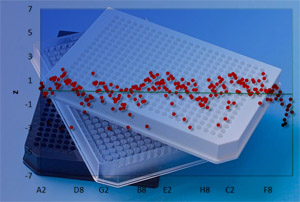
We have established cell-based screening systems for dsRNA mediated gene induction. In a joint effort with Dr. Paul Johnston at The Pittsburgh Molecular Library Screening Center (PMLSC) we are screening chemical and genetic modifiers of TLR3 and RIG-I signaling pathway. Additionally, we are in the process of establishing cell-based screening system for TLR7 and TLR8 in order to identify modifiers of their signaling pathways.
Our initial screening using TLR3 reporter cells have identified a number of anti-psychotic drugs as potential TLR3-IRF3 signaling pathway inhibitors. Mechaniscically these drugs inhibit PI3 kinase activity thereby affect IRF3 signaling, without affecting NF-kB signaling. We have reported these observations in a recent paper in Journal of Immunology (Zhu et al).
Further Reading
Karin, M., Lawrence, T., and Nizet, V. (2006) Innate immunity gone awry: linking microbial infections to chronic inflammation and cancer. Cell. 124, 823-835. (PMID: 16497591)
Cook, D. N., Pisetsky, D. S., and Schwartz, D. A. (2004) Toll-like receptors in the pathogenesis of human disease. Nat Immunol. 5, 975-979. (PMID: 15454920)
O'Neill, L. A. (2003) Therapeutic targeting of Toll-like receptors for inflammatory and infectious diseases. Curr Opin Pharmacol. 3, 396-403. (PMID: 12901949)