
Search
Pulmonary Embolism-Beware Two Important Atypical Presentations
Seems like we have had several atypical PE presentations recently so I thought it timely to quickly highlight some of the well-reported presentations of pulmonary embolism. Remember, although we won't and can't diagnose every case, these types of presentations should at the very least prompt us to consider the diagnosis.
Atypical PE Presentations:
- Syncope-occurs in as many as 15-20% of patients. Make sure PE is on the differential diagnosis of the syncopal patient, especially if there was any preceeding shortness of breath or chest pain.
- Abdominal pain-we just had a case of this last week. A young female 6 weeks into a course of OCPS developed RUQ pain that radiated to the left shoulder. She had NO shortness of breath. However, the RUQ pain was pleuritic. Remember the movement of the diaphragm as it is responsible for abdominal pain presentations of both PE and pneumonia. A d-dimer was obtained and returned 3000. A CT scan was then ordered which showed a large right lower PE. What's the moral of the story? Well, it isn't to rule out PE in patients with belly pain. The lesson here is that upper abdominal pain may reflect disease in the chest (lower lobe pneumona and PE) and vice versa. To make matters worse an ultrasound of the RUQ was ordered 1st which showed gallstones!
Bradycardia in children is most often caused by hypoxemia but can also be caused by acidosis, elevated ICP, vagal stimulation, heart blocks or overdoses.
First degree heart block in otherwise healthy children can be caused by infectious diseases, myocarditis, rheumatic fever, Lyme disease and congenital heart disease.
Third degree heart block can be congenital, caused by maternal connective tissue disorders such as Lupus, or may result from cardiac surgery.
Any infant presenting with a third degree heart block should have an investigation for neonatal lupus.
Show References
Rodenticides have taken many forms. The following is a list of some of the more interesting ones either due to the mechanism of toxicity or how it is lethal. All of these are also toxic to people.
1) Strychnine - Glycine Antagonist at the post-synaptic spinal cord neurons - patient or rat will have convulsion of the extremeties but will be awake, alert and in extreme pain. Essentially look like generalized seizure except awake. Treatment: Benzodiazepines, Analgesia, Supportive
2) Brodifacoum - Long Acting Coumarin - rat eats, later develops elevated INR then tries to run through thin cracks in the wall or takes a little too high of a jump, then boom - subdural or some other internal hemorrhage. In human, they can stay anticoagulated for weeks after an overdose. Treatment: Vitamin K and large padded room
3) Cholecalciferol - Vitamin D precursor - there are big blocks of this drug in the NY and other subway systems. Rat nibbles, gets hypercalcemic, then gets thirsty because of this. Rat runs out into middle of subway to drink out of puddle then - splatt - the M train to Brooklyn comes along. Treatment: IVF, Loop Diuretics, Bisphosphonates
- Motor function is one of the three neurologic responses assessed by the Glasgow Coma Scale (GCS).
- This response is scored on a scale of 1 to 6, 6 being the best score:
- 6 = Obeys commands (does simple things as asked).
- 5 = Localizes to pain (purposeful movements towards painful timuli; e.g., hand crosses mid-line and gets above clavicle when supra-orbital pressure applied).
- 4 = Flexion/Withdrawal to pain (flexion of elbow, supination of forearm, flexion of wrist when supra-orbital pressure applied. (i.e. pulls part of body away when nailbed pinched)).
- 3 = Abnormal flexion to pain (adduction of arm, internal rotation of shoulder, pronation of forearm, flexion of wrist, decorticate response).
- 2 = Extension to pain (adduction of arm, internal rotation of shoulder,pronation of forearm, extension of wrist, decerebrate response).
- 1 = No motor response.
Pneumonia and Sepsis
- As we have discussed, one of the most important components in the ED management of sepsis is the administration of early and appropriate broad-spectrum antibiotics
- Pneumonia remains one of the most common causes of sepsis in the US and worldwide
- Given the steady rise in incidence of MRSA, remember to add vancomycin to your empiric treatment of patients with pneumonia and severe sepsis or septic shock
Feedback as a Teaching Tool
Why do we, in general, stink at giving feedback?
- We were never taught how to do it
- We fear we will hurt someone's feelings
- It's painful to give feedback
Consider a few quick pearls that will increase your success at giving valuable feedback:
- Realize that learners (students/residents) crave feedback....proven in multiple studies
- Feedback IS a powerful teaching tool and isn't just a way of evaluating someone.
- Avoid at all cost, the phrase,"good job." Be specific about what you mean
- Praise in public, perfect in private
- Avoid the "complain syndrome" and don't fall victim to it. This refers to the phenomenon in which we complain about a behavior or trait and NEVER actuall tell the person. We have all done it. Set yourself apart from others by giving the learner the needed feedback.
- Learners won't improve without feedback. Just like the Nike commercial says,"Just do it!"
FrostBite
Now that we are in the cold winter months, we are more likely to see patient with frostbite and hypothermia. Here are some tips for treating frostbite.
- Rapidly rewarm the affected body part. Never attempt rewarming if there is risk of refreezing.
- An appropriate warming technique tub of water at 40-42°C. Higher temperatures should be avoided secondary to the risk of burns. If a tub is not available, use warm wet packs at the same temperature.
- It can take up to 40 minutes for the affected area to thaw. Thawing is complete when the distal areas flush.
- The only indication for early surgical intervention is debridement of blisters, necrotic tissue or fasciotomy if there is compartment syndrome.
- It often takes 1-3 months for frostbitten tissue to be declared viable. The affected area generally heals or shrivels and dries up without surgery. Amputation should be delayed as as long as possible. Early surgical consultation for amputation is rarely needed.
Adapted from Frostbite: Treatment and Medication by C. Crawfor Mechem, MD, MS, FACEP as posted on eMedicine.com.
The most common arrhythmias in children presenting to the ED are:
- Sinus tachycardia (50%)
- SVT (13%)
- Bradycardia (6%)
- Atrial Fibrillation (4.6%)
Atrial fibrillation in children is irregularly irregular with disorganized atrial activity with atrial rates ranging from 350-600 BPM.
Children at increased risk of developing atrial fibrillation include those with underlying structural heart defects and hyperthyroidism.
Hemodynamically stable children have several treatment options including digoxin, amiodarone, propranolol, esmolol, or procainamide for ventricular rate control.
Hemodynamically unstable children need immediate synchronized cardioversion with 0.5 - 1 J/kg. (don't forget light sedation.)
References:
Sacchetti A, Moyer V, Baricella R, et al. Primary cardiac arrhythmias in children. Pediatr Emerg Care 1999;15:95-98
Doniger S. Pediatric Dysrhythmias. Pediatric Emergency Medicine Reports. Sept 2008. Vol 13, No 9 (This was edited by a UMMS Combined EM/PEDS graduated Dr. Jim Colletti who is Associate Residency Director, Emergency Medicine, Mayo Clinic College of Medicine, Rochester, MN.)
Show References
Below is an edited version of this week's neurological clinical pearl. Somehow the scores and their definitions showed up incorrectly matched. See corrections below.
- Verbal function is one of the three neurologic responses assessed by the Glasgow Coma Scale ( GCS).
- This response is scored on a scale of 1 to 5, 5 being the best response.
- 5 = Oriented (responds coherently and appropriately to questions such as name, age, situation).
- 4 = Confused (responds to questions coherently but with some disorientation and confusion).
- 3 = Inappropriate words (random articulated speech but no conversational exchange).
- 2 = Incomprehensible sounds (moaning but no words).
- 1 = No verbal response.
BACKGROUND:
For the first time since its publication, the centers for disease control has dedicated an entire issue of their Morbidity and Mortality Weekly Report to an emergency medical services topic. Vol 55 RR-1 reviews the, "Guidelines for Field Triage of Injured Patients." The report represents a consensus opinion of national experts in EMS, EM, and trauma care. It outlines which patients may be best served via transport to a trauma center.
CRITERION LINKED TO SEVERE INJURY (Consider transport to nearest TRAUMA CENTER)
- GCS < 14, SBP < 90 mm Hg, RR < 10 or > 29 per minute (or less than 20 for infants)
- Penetrating wounds to neck, torso, head
- Flail chest, two or more proximal long bone fractures
- Proximal extremity amputation
- Paralysis
- Open or depressed skull fracture
- Older patients on anticoagulation
From the MMWR: "The National Study on the Costs and Outcomes of Trauma identified a 25% reduction in mortality for severely injured patients who received care at a Level I trauma facility."
EXTRAS:
The remainder of the report details the triage decision making process, explains trauma center capabilities, and provides an interesting and detailed review of trauma transport criteria. Link to the current issue is attached.
http://www.cdc.gov/mmwr/preview/mmwrhtml/rr5801a1.htm
Octreotide
- Somatostatin-analog that supresses insulin secretion but also treats acromegaly, esophageal varices and secretory diarrhea
- Sulfonylurea-induced hypoglycemia requires frequent monitoring and administration of intravenous dextrose
- Octreotide is considered antidotal therapy since it turns off insulin secretion that is caused by sulfonylureas
- Recent article by Fasano et al Ann Emerg Med 2008 showed that octreotide 75 mcg SQ one-time in the ED was superior to "traditional" therapy with fewer recurrent hypoglycemic episodes during the patient's hospitalization.
- Excellent article worth reading, even if its just the abstract
Show References
Teaching in the Emergency Department
Effective ways to teach in the ED:
- Limit the amount of time you spend teaching (more teaching does not = more learning)....Take Home Point: teach a quick pearl about a case and move on. Dont belabor the point and keep teaching for 5-10 minutes. You will loose the learner.
- Make teaching points applicable to the patient. Theoretical stuff is fine but no one cares about the Krebs cycle or ATP.
- Teach "on the fly" (teach as good teaching moments come up on each case). "Board talks" are nice but are often times not practical in a busy ED.
- Above all, be enthusiastic...without this all teaching will be ineffective
Show References
Clinical Manifestations of Anaphylaxis
- Importantly, manifestations of anaphylaxis occur along a continuum and are dependent upon the type, route, and quantity of antigen exposure.
- Cutaneous (90%), respiratory (40-70%), cardiovascular (30-35%), gastrointestinal (40%), neurologic (10%), ocular, and genitourinary symptoms can all be seen.
- Include anaphylaxis in the differential of any patient with undifferentiated shock, as 10% will not manifest the cutaneous symptoms of urticaria and/or angioedema.
Show References
The use of a glycoprotein 2b/3a receptor antagonist (often inaccurately referred to as a "G2b3a inhibitor") is considered a Class I intervention for patients with unstable angina/non-STE-MI that are going for percutaneous coronary intervention, according to the ACC/AHA 2007 Guidelines.
The exact timing of the initiation of the G2b3aRA is the subject of some debate, but it is certainly worth discussing with your cardiologist consultant/receiving physician whether they want one of these medications initiated in the ED before taking the patient to the cath. lab, and if so which one of these meds they prefer.
Show References
Patient with iritis will typically present with a painful red eye and it can sometimes be difficult to tell if it is due to conjunctivitis or a corneal abrasion. Some tips that can help differentiate iritis from other causes of painful red are:
- When pain reduction was used as a diagnostic tool, it had a sensitivity of 80% and a specificity of 86% in determining whether a simple corneal injury was present. In iritis, the pain will NOT be relieved with topical anesthetic.
- In iritis, injection will be localized predominantly around the iris and not diffusely over the conjunctiva.
- The consensual light reflex can be used to make the diagnosis. Of course, shining a light in the affected eye will cause pain, but in iritis shining a light in the normal, unaffected eye (by causing consensual movement of the other affected iris) will cause pain if iritis is present.
Finally, ensure you document:
- Visual Acuity corrected in both eyes. Use a pinhole if they forgot their glasses.
- That you flipped their eyelids to make sure that no foreign bodies are lurking under the lids
- Stain their eyes with flouriscen to ensure there are no corneal abrasions in addition to the iritis.
Show References
Six indications that would lead you to suspect SVT in children:
- history incompatible (no history fever, volume loss, hemorrhage or pain
- P waves absent /abnormal
- HR does not vary with activity
- Abrubt rate changes
- Infants : rate usually >220
- Children : rate usually >180
Remember in the stable child treat withe Adenosine 0.1mg/kg rapid IV push followed by rapid flush.
In the unstable child treat with synchronized cardioversion 0.5 -1 Joules/kg.
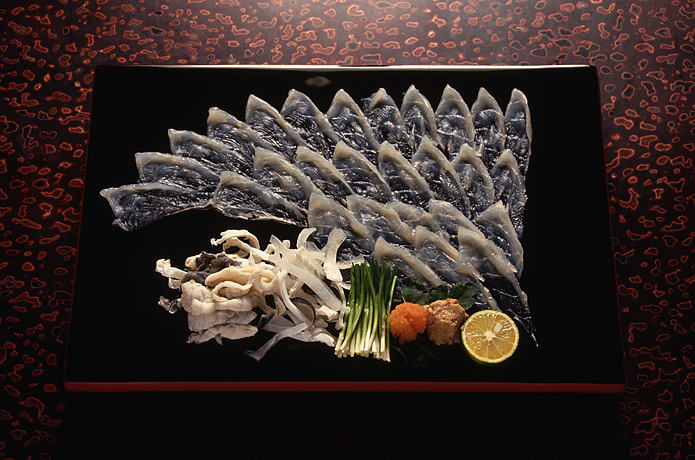
Tetrodotoxin - Sodium Channel blocker - Extremely toxic causes paresthesias, dysrhythmias and paralysis - Found in the sushi called Fugu (From the Pufferfish) - Eating the sushi is considered a delicacy and goal is to get just enough of the toxin to get perioral paresthesias after eating. - Also found in the blue-ringed octopus, angelfish and parrot fish. Enjoy your seafood and take a look at the attached pic of actual fugu.
Attachments
- Eye function is one of the three neurologic responses assessed by the Glasgow Coma Sacle ( GCS).
- This response is scored on a scale of 1 to 4, 4 being the best response.
- 4 = Spontaneous eye opening.
- 3 = Eye opening in response to speech (not to be confused with eye opening in an asleep patient when prompted with speech; these would receive a 4, not a 3).
- 2 = Eye opening with painful stimuli (i.e. nailbed pressure, supraorbital compression, and/or sternal rub).
- 1 = No eye opening.