
Search
Question
11 year-old boy presents with right knee pain and swelling after falling off of his bicycle. What's the diagnosis?

Show Answer
Show References
Show References
In the rare circumstance you need to treat a patient with suspected PID and an allergy to doxycycline, what is the alternative?
For oral regimens, azithromycin is an option in place of doxycycline.
- In one randomized trial, azithromycin demonstrated short-term effectiveness when given 500 mg X 1, followed by 250 mg/day for 6 days.
- In another randomized study, the combination of ceftriaxone 250 mg IM single dose and azithromycin 1 g orally once a week for 2 weeks was effective.
Suggested regimen for PID with doxycycline allergy:
- Ceftriaxone 250 mg IM X 1
- Azithromcyin 500 mg IV/PO X 1, then 250 mg PO daily for 6 days
- plus/minus Metronidazole 500 mg PO twice daily for 14 days
Show References
It is not often that a CT will be able to give you a hint to a toxicologic diagnosis. The following are CT findings that are either suggestive and even sometimes almost diagnostic for a given to toxin:
1) Intraparenchymal or Subarachnoid Hemorrhage: sympathomimetics or mycotic anuerysm rupture secondary to IV drug abuse
2) Basal Ganglia bilateral focal necrosis: characteristic of carbon monoxide, cyanide, hydrogen sulfide and even methanol
3) Severe advanced atrophy out of proportion for age: alcoholism, toluene
Show References
General Information:
• Millions of people around the world (including our patients who travel and victims of disasters like Hurricane Sandy) are exposed to non-potable water.
• How to treat contaminated water:
♦ Filter cloudy water through a clean cloth or allow to settle prior to treatment
♦ The safest method is boiling water vigorously for 1 minute (or, at least 3 minutes at altitudes >6,000ft)
♦ Chemical disinfection is not as effective but, if boiling is not possible, use either:
• 2 drops of unscented bleach (5.52% Cl) per quart/liter of water. (Unknown strength? Add 10 drops per quart/liter.)
-Or-
• 5 drops of tincture of 2% iodine per quart/liter.
- If the water is cloudy or cold, double the chlorine or iodine.
- Notes: Pregnant women or people with thyroid conditions should not use iodine
♦ UV decontamination can be accomplished by leaving clear bottles of water in direct sun for >6 hours or special equipment, but requires clear water
• Boiling, Chlorine/Iodine, and UV will kill viruses, bacteria, and Giardia
• Only Boiling kills Cryptosporidium
Bottom Line:
• If bottled water is available, use it.
• If not, boil your water.
• In order to treat for a wide variety of pathogens, it is best to combine available methods.
University of Maryland Section for Global Emergency Health
Author: Andi Tenner
Show References
Managing Critically Ill Patients with AKI
- Acute kidney injury (AKI) occurs in almost 50% of hospitalized patients and is an independent risk factor for mortality.
- Updated guidelines have recently been published on the management of patients with AKI.
- Pearls for the management of patients with, or at risk of, AKI include:
- Optimize volume status and perfusion pressure
- Crystalloids preferred over colloids
- Consider vasopressors to maintain MAP > 65 mm Hg
- Avoid nephrotoxic drugs
- Control co-factors
- Monitor intra-abdominal pressure
- Avoid hyperglycemia - target glucose < 150 mg/dL
- Optimize volume status and perfusion pressure
Show References
Question
2 year-old male with past medical history of asthma presents with fever and respiratory distress. CXR is shown below. What’s the diagnosis? (Hint: ...look beyond the obvious)

Show Answer

Show References
Show References
Hematoma blocks for distal radius fractures
Hematoma blocks provide safe, effective analgesia without an increased risk of post procedural infections when compared with other regional blocks
Provide equal reduction quality AND pain control as procedural sedation with Propofol.
However, mean time to reduction (0.9 vs. 2.6 hours) and time to discharge post procedure (0.74 vs. 1.17 hours) were reduced with hematoma blocks.
Consider this option next time the department is busy or the patient is not an ideal procedural sedation candidate.
Show References
- General information
- Organism: 5 Plasmodium species (P. falciparum, P. vivax, P. ovale, P. malariae, P. knowlesi)
- P. falciparum is responsible for most severe disease.
- P. vivax and P. ovale are responsible for recrudescent disease.
- Transmission via the female Anopheles mosquito, which bites at night or in the early morning.
- Endemic in Asia, Africa, Central America, and South America
- Organism: 5 Plasmodium species (P. falciparum, P. vivax, P. ovale, P. malariae, P. knowlesi)
- Clinical presentation
- Initially, the patient presents with an acute febrile illness: fever, chills, headache, nausea, lethargy, and upper respiratory symptoms.
- Infection with P. falciparum can further progress to severe organ dysfunction.
- The disease course is unpredictable in the non-immune individual.
- Diagnosis
- Thick and thin peripheral blood smears demonstrating organism
- Thick smear – confirms Plasmodium parasites
- Thin smear – allows speciation of Plasmodium parasites
- Hyperparasitemia is associated with increased mortality
- Thick and thin peripheral blood smears demonstrating organism
- Treatment
- P. falciparum or species unidentified
- For severe malaria, IV quinine (quinidine if quinine not available)
- IV artusenate is available from the CDC as a quinidine/quinine alternative.
- DO NOT USE Chloroquine for severe malaria
- Patients with evidence of complicated malaria (>3% parasitemia, signs of organ dysfunction, alterations in mental status) should be admitted to an ICU.
- P. falciparum or species unidentified
University of Maryland Section for Global Emergency Health
Author: Emilie J.B. Calvello, MD, MPH
Show References
A low-tidal volume (or protective) strategy of mechanical ventilation (i.e., tidal volume of 6-8cc/kg of ideal body weight) has previously been demonstrated to be beneficial in patients with acute respiratory distress syndrome (ARDS).
A meta-analysis was recently performed to determine whether this strategy of mechanical ventilation is also beneficial for patients without lung injury prior to initiation of mechanical ventilation.
Dr. Neto, et al. performed a meta-analysis of 20 studies (total of 2,822 mechanically ventilated patients) comparing a conventional ventilation strategy (average tidal volume was 10.6 cc/kg) to a protective ventilation strategy (average tidal volume was 6.4 cc/kg) of mechanical ventilation.
The authors concluded that patients ventilated with a protective lung-strategy had reductions in:
- Mortality
- Lung injury and ARDS
- Atelectasis
- Pulmonary infections
- Length of hospital stay
Bottom-line: This meta-analysis supports the notion that a strategy of low-tidal volume ventilation may have benefits for patients without ARDS, however prospective studies are needed.
Show References
Do you like placing ultrasound-guided IV catheters? Check out this trick for covering the probe during the procedure.
http://ultrarounds.com/Ultrarounds/The_Vascular_Probe_Protector.html
or
https://www.youtube.com/watch?v=ZuOq6Ea_FbA&feature=plcp
Show References
Show References
Tarsal Tunnel Syndrome (TTS)
Prior pearls have addressed Carpal Tunnel Syndrome and Cubital Tunnel Syndrome, which affect the median and ulnar nerves, respectively. Tarsal tunnel syndrome, is a similar compression neuropathy of the tibial nerve as it transverses through the tarsal tunnel of the foot.
The tarsal tunnel is located behind the medial malleolus, and is where the posterior tibial artery, tibial nerve and several tendons transverse. Patients will present complaining of numbness of the foot radiating into Digits 1-4, pain, burning , and tingling of the base of the foot and heel. TTS has many causes and is more common in athletes.
Consider the diagnosis in patients with foot pain and numbness. If interested in more information about TTS please consider reading this eMedicine article, http://emedicine.medscape.com/article/1236852-overview
Question
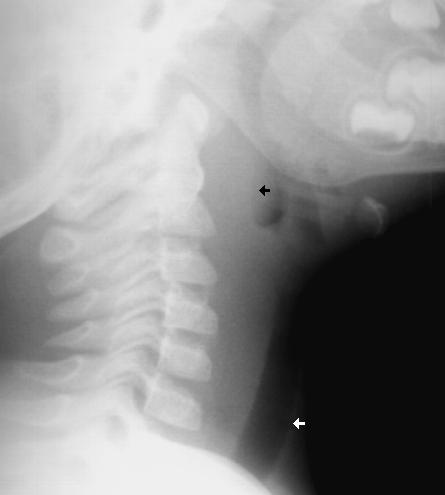
A 1 year old gets sent from their pediatrician’s office for rule out meningitis. They presented with fever for 2 days and neck rigidity. Your LP results are normal. What additional test should you consider?
Show Answer
· Explosions can cause a complex series of injuries, which may include subtle or delayed findings. Repeated evaluations, such as serial abdominal exams, may be required.
· Blast injuries are divided into 4 categories:
o Primary blast injuries: Injury from blast wave over-pressure. Found in gas filled structures (ear, lung, hollow organs)
o Secondary blast injuries: Injury from thrown objects (primarily penetrating trauma, but may blunt)
o Tertiary blast injuries: Injuries from patient being thrown by blast wave (blunt trauma)
o Miscellaneous (quaternary) blast injuries: Injuries from other causes, such as burns, crush injuries, rhabdomyolysis, and toxic chemicals.
· The most common primary blast injury is tympanic membrane rupture.
University of Maryland Section for Global Emergency Health
Author: Jon Mark Hirshon
Show References
Burn Patients and Antibiotic Dosing
- Burn patients have a number of abnormalities in the early postinjury phase that can significantly impact the efficacy of antimicrobial therapy. These include hypovolemia, hypoalbuminemia, and increasing GFR.
- A few pearls when dosing select antibiotics in burn patients:
- Aminoglycosides: in the absence of renal impairment, consider more frequent dosing to achieve adequate concentrations.
- Beta-lactams: typical doses often don't reach effective concentrations; increase the dose, frequency of administration, or duration of infusion.
- Vancomycin: the typical dose of 1 gm is usually ineffective; use a larger loading dose (15-20 mg/kg).
- Linezolid: standard doses are usually ineffective; use a higher initial dose.
Show References
Question
33 year-old male found unconscious by EMS and complains of right shoulder pain upon waking up in the ED. Diagnosis?

Show Answer
Show References