
Search
A patient presents with altered mental status for unclear reasons- could it be anticholinergic syndrome?
There are many medications (e.g. Beers Criteria, see pearl from March 5, 2017) and plants (e.g.: certain mushrooms) that can cause this life-threatening toxidrome.
The quick mnemonic for anticholinergic poisoning is:
· Hot as a hare (hyperthermia)
· Red as a beet (flushed)
· Cry as a bone (decreased secretions)
· Blind as a bat (mydriasis)
· Mad as a hatter (delirium)
· Full as a flask (urinary retention)
Bottom line: Keep anticholinergic syndrome within your differential for a patient with altered mental status without a clear cause.
Note: An earlier version of this pearl incorrectly listed organophospahtes, which cause cholingeric toxicity.
Show Additional Information
Show References
The poor sensitivity of bedside echocardiography to identify all-comers with pulmonary embolism is well documented. Most series cite a sensitivity and specificity of 31% to 72% and 87% to 98%, respectively (1,2). But as Nazerian et al demonstrate in their recent publication in Internal and Emergency Medicine, the diagnostic performance of bedside echocardiography is far more reliable in the subset of patients presenting in shock (3).
Of the 105 patients included in the final analysis, in 43 (40.9%) PE was determined to be the etiology of their shock. Bedside echo demonstrated notable diagnostic prowess when employed in this subset of patients, sensitivity (91%), specificity (87%), –LR (0.11), +LR (7.03). The sensitivity and –LR were further augmented when the venous US of the LE was included (sensitivity of 95% and –LR of 0.06) in the diagnostic workup.
Show References
Older patients with acute coronoary syndrome (ACS) are less likely to present with typical ischemic chest pain (pressure-like quality, substernal location, radiating to jaw, neck, left arm/shoulder and exertional component) compared with younger counterparts.
Typical angina symptoms predictive of acute myocardial infarction (AMI) in younger patients were less helpful in predicting AMI in the elderly population.
Autonomic symptoms such as dyspnea, diaphoresis, nausea and vomiting, pre-syncope or syncope are more common accompaniments to chest discomfort in elderly ACS patients.
Symptoms may also be less likely to be induced by physical exertion; instead, they are often precipitated by hemodynamic stressors such as infection or dehydration
Bottom Line: Keep a high index of suspicion for ACS in older patients as they present atypically.
Show References
- The incidence of Staphylococcus aurea as a urinary pathogen is increasing, however, this finding may represent more than a simple urinary tract infection.
- One review found an 8-21%rate of association between S. aureus in the urine with bacteremia.
- Additional work up, including blood cultures, may be warranted in patients with systemic symptoms, lack of access to follow up, and no urinary tract pathology or instrumentation.
Show Additional Information
Show References
Post-partum hemorrhage results in approximately 100,000 deaths annually and is the leading cause of maternal death globally.
In a just published study in the Lancet, among approximately 20,000 women from 21 countries enrolled in the WOMAN study, death due to bleeding was significantly reduced in women given tranexamic acid (1.5%) compared to those in the placebo group (1.9%) {RR 0.81, 95% CI 0.65–1.00; p=0.045)}. This was especially true in women given tranexamic acid with 3 hours of giving birth (1·2%) vs in the placebo group (1·7%) {RR 0.69, 95% CI 0.52–0.91; p=0·008)}.
Bottom line:
The authors’ interpretation “Tranexamic acid reduces death due to bleeding in women with post-partum haemorrhage with no adverse effects. When used as a treatment for postpartum haemorrhage, tranexamic acid should be given as soon as possible after bleeding onset.”
Show References
Distal Radius Fractures
High energy mechanism in younger patients
Falls more common in older patients
Higher incidence in older women due to osteoporosis
May indicate overall poor bone health
Avoid splinting in positions of flexion (palmer) and ulnar deviation
Palmer flexed positions may have a higher rate of displacement
Non operative treatment
Extra-articular fx, less than 5mm shortening of radius, Less than 5 degrees of dorsal angulation.
Consider fractures than are only stable in extreme positions to be unstable
If fx involves the ulnar styloid or DRUG (distal radial ulnar joint) place in long area posterior splint with arm in mid supination (anatomic position of forearm)
Botulism is a rare neurologic condition characterized by GI symptoms that progressed to cranial nerve dysfunction and symmetric descending paralysis. Foodborne botulism is due to ingestion of botulinum toxin that is produced by clostridium botulinum, an ubiquitous bacterium in our environment.
Bottom line:
- Foodborne botulism presents with GI symptoms that is followed by symmetric descending flaccid paralysis.
- Botulinum antitoxin prevents further progression of neurologic deficit; it does not reverse the neurologic deficit that is present prior to administration.
- Contact your local poison center, and state health department & CDC regarding management and access to botulinum antitoxin.
Maryland Department of Health and Mental Hygiene
- During business hours: 410-767-6700
- After hours: 410-795-7365
CDC Emergency Operations Center: 770-488-7100
Show Additional Information
Show References
Vasovagal syncope is a subtype of neurally mediated syncope, and it is distinctly different from orthostatic hypotension.
Patients with orthostatic syncope have severe orthostatic hypotension that results in transient loss of consciousness immediately or within moments of standing up. This is different from neurally mediated syncope, which develops gradually under conditions of prolonged orthostatic stress such as standing for several minutes. Tilt table testing is useful for true orthostatic syncope, but not for neurally mediated syncope. In addition, checking for “orthostatic hypotension” may not capture patient with orthostatic syncope, because the hypotension occurs so quickly after standing up. Of note, patients may still have orthostatic tachycardia or intolerance with neurally mediated syncope.
Show References
Antibiotics in Sepsis
- Currently international guidelines for the management of sepsis and septic shock recommend antibiotic administration within 1 hour of recognition.
- With the persistent problem of ED boarding, many patients with sepsis and septic shock remain in the ED long after the initial dose of broad-spectrum antibiotics.
- A recent single center, retrospective cohort study demonstrated that 1 out of 3 patients with sepsis or septic shock experienced major delays in the time to the second dose of antibiotics. In fact, over 70% of patients who were given an initial antibiotic with a 6-hr recommended dosing interval experienced major delays.
- Inpatient boarding in the ED was found to be an independent risk factor for major delays.
- Take Home Point: Don't forget to write for additional doses of antibiotics in your boarding patients with sepsis.
Show References
It is common teaching that a Segond Fracture is associated with ACL tears. A reverse Segond fracture, avulsion fracture of the knee due to avulsion of the deep fibers of the medial collateral ligament, has also been described that was initially reported as associated with PCL tears. However, a more recent study has not been able to collaborate the PCL connection, but has shown that a reverse Segond fracture is associated with multiple ligamentous injuries to the knee.
Take home point: If you note a Reverse Segond fracture on your plain flips have the patient followup with orthopedics for a possible MRI, as they probably have other ligamentous injuries that might need treatment.
Show Additional Information
Show References
IM ziprasidone (Geodon) has a relatively quick onset of action with a half-life of 2-5 hours. Although commonly used in adults, there has not been a study looking at an effective dose in pediatrics. Based on the study referenced, the suggested pediatric dose of ziprasidone is 0.2 mg/kg (max 20mg).
Show Additional Information
Show References
Currently, Nigeria is having the worst outbreak of bacterial meningitis in almost 10 years, involving 23 states, 13,420 suspected cases, and 1,069 deaths, as of May 9.
Bacterial meningitis outbreaks frequently occur in West Africa. The area most frequently struck by epidemics of bacterial meningitis is in the sub-Saharan region of Africa. This includes 26 countries and over 400 million people. Epidemics most often occur in the dry season from December-June. Neisseria meningitides serogroup A historically accounts for approximately 90% of the cases.
The U.S. Centers for Disease Control and Prevention recommends quadrivalent vaccines (protects against four serogroups A, C, W, and Y) for individuals traveling or living in countries in which meningococcal disease is hyperendemic or epidemic.
Show References
High flow nasal cannula (HFNC) is a valid option in the management of acute hypoxic respiratory failure (AHRF) without hypercapnia, as evidenced by multiple studies including the FLORALI trial. Failure of HFNC, however, may result in delayed intubation and worsened clinical outcomes.
Factors predicting HFNC failure and subsequent intubation include:
- Lack of RR improvement at 30 and 45 minutes after initation of HFNC
- Lack of SpO2% improvement at 15, 30, and 60 minutes
- Persistence of paradoxic breathing (thoracoabdominal dyssynchrony) at 15, 30, 60, and 120 minutes
- Presence of additional organ system failure, especially hemodynamic (shock) or neurologic (depressed mental status)
Consider whether or not HFNC is appropriate in your patient with AHRF, and if you use it, reevaluate your patient to ensure improvement, or escalate their respiratory support.
Show Additional Information
Show References
Iliotibial band tendonitis
IT band is the continuation of the tensor fascia lata and inserts on the tibia at Gerdy's tubercle
Common cause of lateral knee pain seen in Primary care/Sports med clinics
Mechanism: May be due to excessive friction between the IT band and the lateral femoral condyle
Second most common overuse injury of the knee (PF syndrome). Not an acute event.
Affects up to15% of active individuals
Impingement zone is at 30 degrees of knee flexion
Most common in runners and cyclists
Pain localized over the lateral femoral condyle. Better w/ rest. Often occurs at a predictable distance into the run and not at onset.
Exacerbated with changes to mileage or running terrain.
Additional risks include poor shoes (best to change every 300 to 500 miles), excessive foot pronation (pes planus), quad versus hamstring strength asymmetry, weak hip ABductors, leg length discrepancy, tight IT band.
Show References
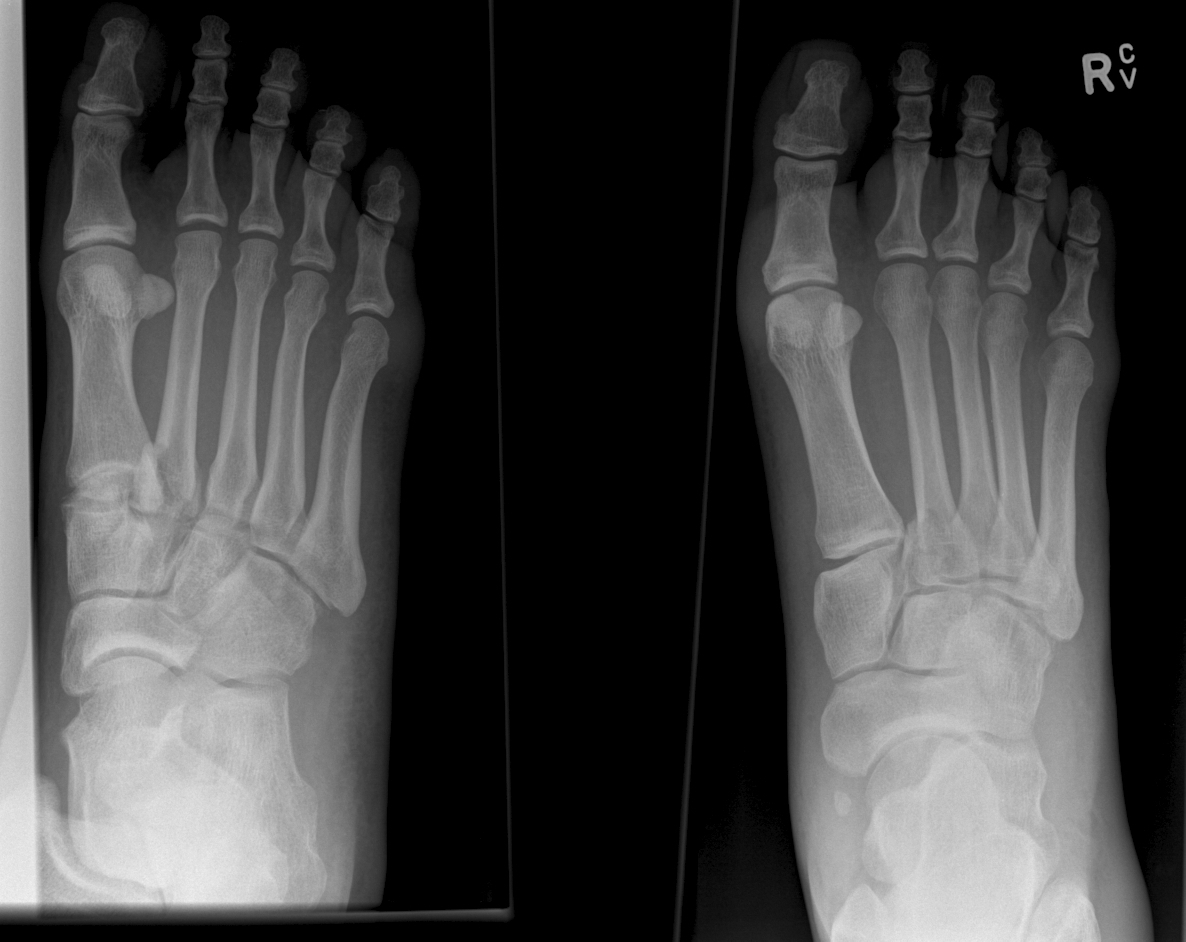
Lisfranc Fracture: Typically consists of a fracture of the base of the second metatarsal and dislocation, though it can also be associated with fractures of a cuboid.
- Fracture findings on plain films may be subtle.
- If in doubt obtain weight bearing AP views of the foot to demonstrate dislocation/fracture.
- If weight bearing films are negative and you are still suspicious consider a CT scan of the foot.
Click below see image of fracture
Show Additional Information
Bottom line: Do not prescribe codeine or tramadol for cough or pain in children and breastfeeding moms.
Show Additional Information
- Coricidin Cough & Cold medicine also known by street name 'Triple C" is the most commonly reported abused dextromethorphan-containing product.
- Dextromethorphan at high doses acts as a dissociative general anesthetic and hallucinogen similar to Ketamine and Phencyclidine (PCP) by antagonizing the NMDA receptor in a dose dependent manner.
- Detromethorphan-containing products are appealing to teens as they are easily available (OTC), legal, inexpensive, and preceived as safe.
- Street names for dextromethorphan products include DXM, CCC, Trile C, Skittles, Robo, Poor Man's PCP,. Abuse of Robitussin products is referred to as "Robotripping"
- Additional toxicity can occur from the coingredients (pseudoephedrine, acetaminophen, and antihistamines such as Chlorpheniramine) is a serious concern of taking large amounts of OTC cough and cold medications for the Dextromethorphan content. Chlorpheneriamine is a first generation H1-histamine receptor antagonist with potent antimuscarinic properties.
- Dextromethorphan is not detected by basic drug screens and should be considered when evaluating patients with a dissociative toxidrome. Acetaminophen levels should be obtained.
- No specific antidote exists for dextromethorphan toxicity. Benzodiazepines should be administered for seizures and aggressive cooling measures for hyperthermia. Naloxone can be considered for use in patients in a coma or with respiratory depression but variable results are reported.
Show Additional Information

Show References
Haloperidol has a higher D2 receptor antagonist effect than standard antiemetic treatment agents such as metoclopramide. In addition, newer antipsychotic agents such as Olanzapine have a high affinity at multiple antiemetic sites such as the dopamine and serotinergic receptors.
While formal RCT's are still in the works, multiple sources including palliative care, emergency medicine, and pain journals support their use in refractory emesis.
Consider Haloperidol 3-5 mg IV.
Check an EKG for long QTc prior to use. Consider dose reduction of haloperidol in those with hepatic impairment. Also consider dose reduction in patients taking carbamazepine, phenytoin, phenobarbital, rifampicin, or quinidine due to that pesky CYP3A4 inhibition.
Consider Olanzapine 2-5 mg IV.
Several case reports have shown a higher rate of success with olanzapine for refractory emesis. Olanzapine has similar precautions as those to haloperidol (EKG, hepatic impairment), although it's CYP drug interactions are less common. Additionally, use olanzapine cautiously in hyperglycemic patients as there are several case reports of olanzapine prompting episodes of DKA. Consider frequent blood sugar checks or small doses of insulin in hyperglycemic patients.
Take Home Points:
Consider the antipsychotic agents Haloperidol or Olanzapine for patients with refractory emesis, they may be more effective than traditional antiemetics.
Get an EKG prior to administration to check for QTc prolongation. As the classical and atypical antipsychotic agents are sedating, use caution in conjunction with other sedating medications (such as benzodiazepines).
Show Additional Information
Show References
- Vasogenic cerebral edema is most commonly seen with brain tumors and cerebral abscesses.
- It mainly involves the white matter.
- Gray-white differentiation is maintained, so the edema has a finger-like pattern on CT (see Figure).
- It is caused by disruption of the blood-brain-barrier, thus responds to treatment with steroids.