
Search
Midshaft Clavicle Fractures
Have been in the sports headlines over the last several months
http://www.orthopaedicsone.com/wp-content/uploads/2024/06/379191373.png
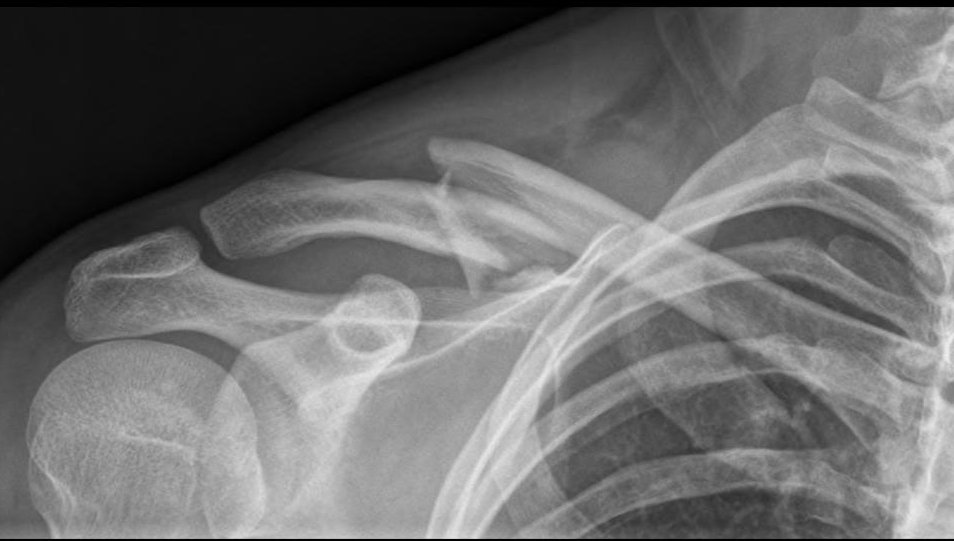
About 3 - 3.5% of all adult fractures
Typical patient is young and active, usually males < 30 years old
Most clavicle fractures (up to 80%) involve the middle third

Mechanism: Typically direct impact or FOOSH
“S” shaped bone with thinnest & narrowest segment at junction between middle and distal third
Plain film views:
- Upright AP
- 15° (or greater) cephalic tilt (improved clavicle visualization by eliminating overlapping scapula )
Appearance: 2/3 non-displaced
Displaced fractures
- Medial fragment pulled posterior and superior by SCM muscle
- Lateral fragment pulled inferior and medial by the pectoralis muscle and weight of arm
Because of the effects of gravity, attempt to get clavicle series in upright position
Otherwise supine view may underestimate degree of displacement
What to look for on plain film
Displacement
- Measure as a percent relative to width of clavicle
- >100% displacement has high risk of nonunion
- Shortening
- Measure the distance between the corresponding ends of the medial and lateral fragments
- Shortening >2cm associated with decrease shoulder strength and endurance
- http://www.orthopaedicsone.com/wp-content/uploads/2024/06/379191374.png
- https://jsesinternational.org/cms/10.1016/j.jseint.2020.03.005/asset/2a9033e8-0d2f-4569-8bac-d545d7d69e75/main.assets/gr1.jpg
- Also consider chest film and use this to compare the lengths of the injured and uninjured clavicles
- Measure the distance between the corresponding ends of the medial and lateral fragments

