
Search
21-40 of 75 results by Danya Khoujah
Show References
Benign headaches are common in bodybuilders. However, several less benign headaches are worth noting:
- Low cerebrospinal fluid (CSF) pressure headache: caused by a small dural tear mostly at the thoracic level. Similar to postdural headache. Treated by recumbency, and blood patches if recalcitrant.
- Subarachnoid hemorrhage (SAH)
- Spontaneous intracranial hemorrhage
- Ischemic stroke
- Dural sinus thrombosis
All except the first two are exclusively reported in patients on anabolic steroids, growth hormone, and/or “energy” supplements. Make sure to ask your patient about these risk factors.
Show References
15% of older adults presenting to ED for dizziness have serious etiologies; 4-6% are stroke-related and sensitivity of CT for identifying stroke or intracranial lesion in dizziness is poor (16%), so if CNS etiology suspected, seek neuro consult or MRI (83% sensitivity)
Show References
- Hyperattenuation = bright = dense (blood)
- Hypoattenuation = dark = radiolucent (fluid, air, lipid, scar)
- Masses that are darker + increased volume or mass effect = edema (image 1)
- Masses that are darker + decreased volume = scar tissue or atrophy (image 2)
- Masses that are bright + edema = hemorrhage (image 3)
- Adding IV contrast improves detection of tumors: abnormal enhancement from disruption of blood brain barrier, necrosis or increased vascularity. (Image 4)
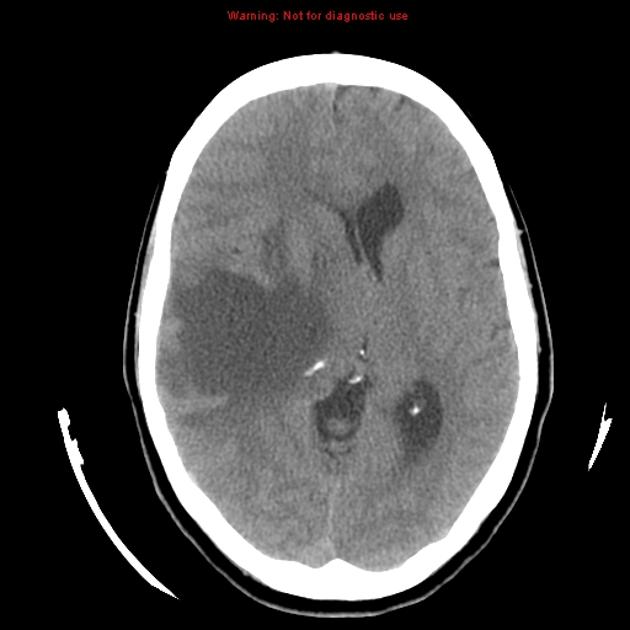
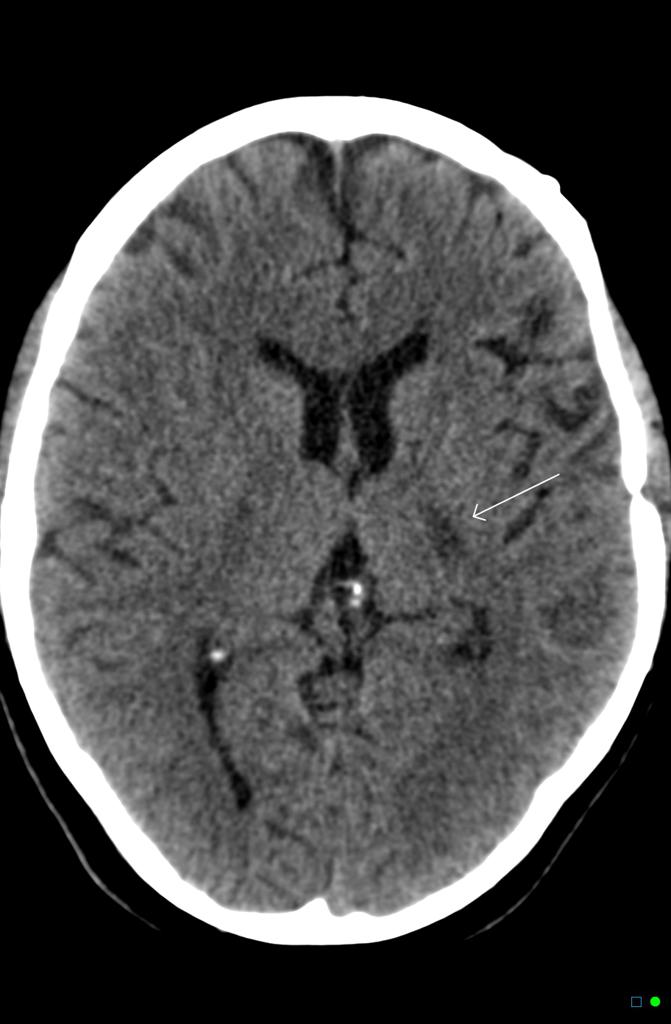
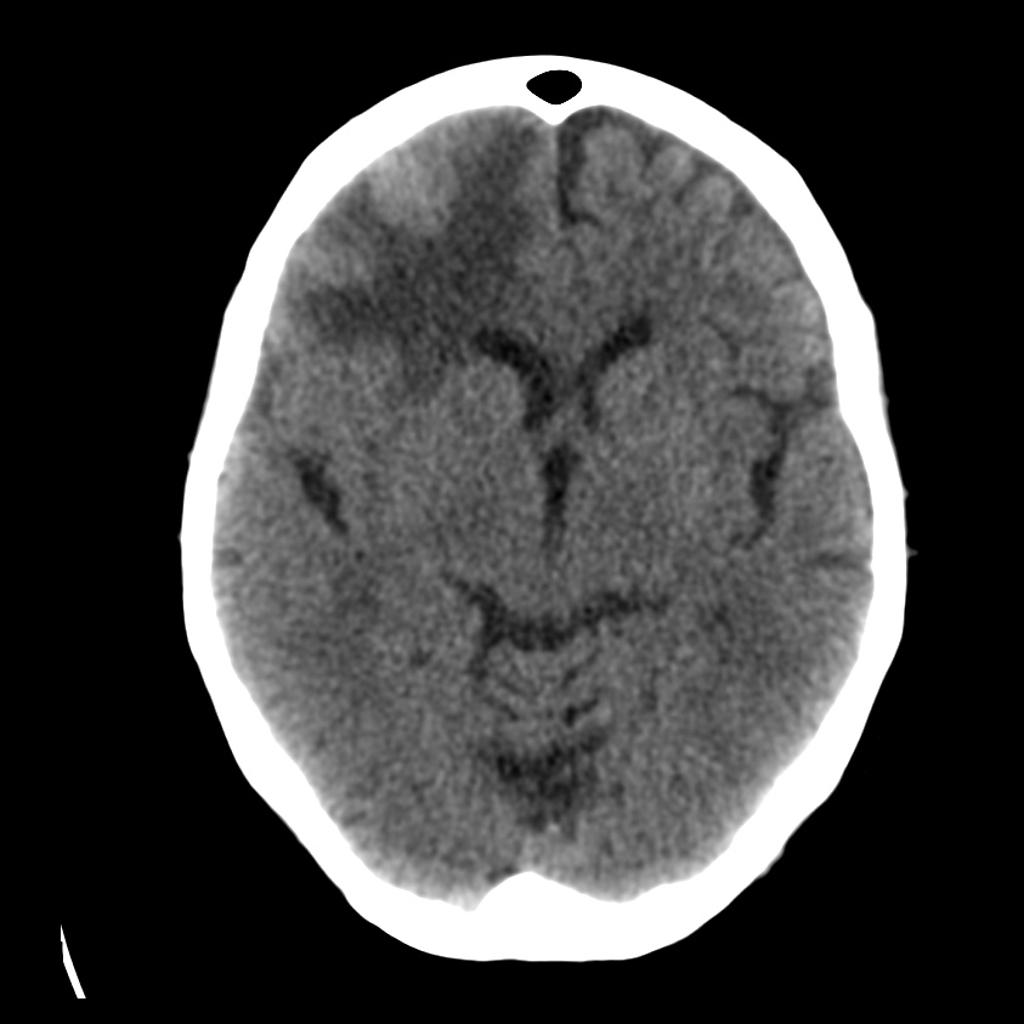
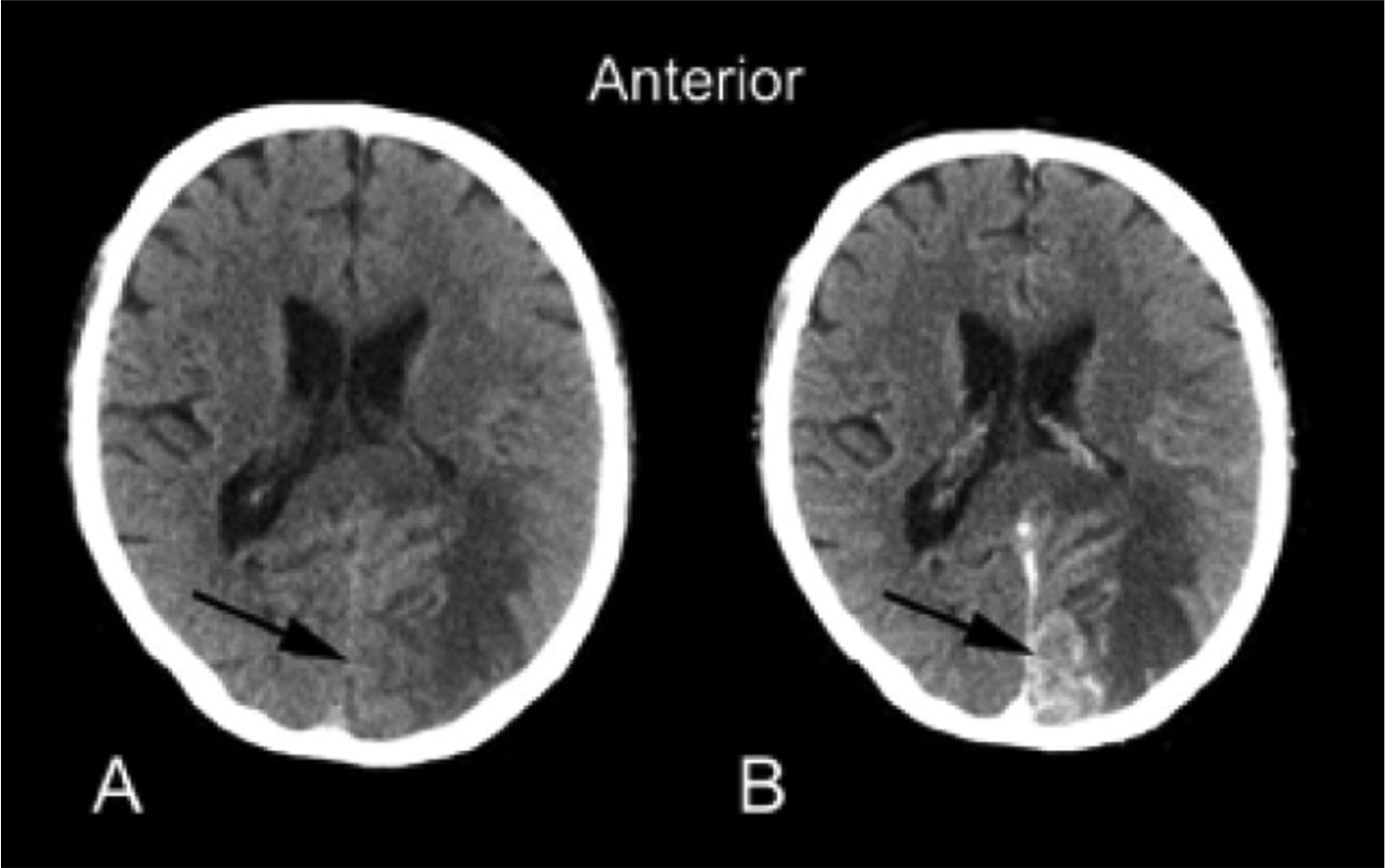
Show References
A recent study was undertaken to validate the 4A's Test for the assessment of delirium in the elderly, with particular focus on inpatient geriatric patients; it revealed that the tool had high sensitivity in detecting delirium, particularly in those with dementia or language barriers, in whom this diagnosis can often be difficult to make. Further studies would be useful in a similar demographic of emergency department geriatric patients to confirm that this straightforward test is generalizable to the emergency department geriatric patient population.
Show Additional Information
Show References
Show References
Asymptomatic bacteriuria is common and increases with age, with an incidence of up to 50% in women over the age of 70. Asymptomatic bacteriuria does not carry an associated high morbidity or mortality if left untreated; it is usually transient and resolves spontaneously. In order to decrease polypharmacy and possible drug interactions in our elderly patients, they should only be diagnosed with and treated for a UTI if they have laboratory evidence of a UTI (bacteriuria and pyuria) and have two of the following:
· Fever
· Worsened urinary urgency or frequency
· Acute dysuria
· Suprapubic tenderness
· Costovertebral angle tenderness
Show References
Show References
Show References
It's respiratory infection and flu vaccine season! Time to brush up on Guillain-Barré Syndrome..
- It is the most common cause of acute or subacute flaccid weakness worldwide
- 70% of cases are preceded by an infection in the past 10-14 days, but most are minimized or forgotten by the patient. 40% of these infections are by Campylobacter jejuni.
- 30% develop respiratory failure requiring intubation and ventilation
- Half of the patients will develop their maximum weakness by 2 weeks, most will develop it by 4 weeks.
Show References
Providing consistent, quality emergency care to the elderly is critically important. The Geriatric Emergency Department (GED) guidelines, developed collaboratively, provide a standardized set of guidelines to help improve care of the geriatric population in the emergency department.
Show Additional Information
Show References
Show References
- It most commonly occurs in patients with preexisting pituitary adenomas, but 3 out of 4 patients with pituitary adenomas are unaware of their diagnosis.
- Patients may acutely present with thunderclap headache, with or without visual field deficits or cranial nerve dysfunction. They may also have meningeal symptoms due to extravasation of blood into the subarachnoid space.
- Endocrine dysfunction is common but not readily diagnosed in the ED.
- Symptoms may be triggered by some hormonal treatments (e.g. GnRH agonists for prostate CA), head trauma, angiographic procedures, or anticoagulation therapy.
- CT is diagnostic in only one-third of cases, but can reveal the intrasellar mass in 80% of cases, and therefore should be the initial test. Blood may be missed in subacute cases.
- MRI is the test of choice, with a sensitivity of over 90%.
Bottomline: Keep pituitary apoplexy in your differential when considering SAH or meningitis, especially in the presence of risk factors, and have a low threshold to order an MRI.
Show References
When you are working up an elderly patient for trauma look for patterns such as circumferential bruising on the wrists that have the pattern of fingers the same way you would look at the injuries of a child. Remember that the person who is sitting next to them is frequently the person that is abusing them. Therefore, it is important to interview the patient alone.
Show References
Show References
Older patients with acute coronoary syndrome (ACS) are less likely to present with typical ischemic chest pain (pressure-like quality, substernal location, radiating to jaw, neck, left arm/shoulder and exertional component) compared with younger counterparts.
Typical angina symptoms predictive of acute myocardial infarction (AMI) in younger patients were less helpful in predicting AMI in the elderly population.
Autonomic symptoms such as dyspnea, diaphoresis, nausea and vomiting, pre-syncope or syncope are more common accompaniments to chest discomfort in elderly ACS patients.
Symptoms may also be less likely to be induced by physical exertion; instead, they are often precipitated by hemodynamic stressors such as infection or dehydration
Bottom Line: Keep a high index of suspicion for ACS in older patients as they present atypically.
Show References
Vasovagal syncope is a subtype of neurally mediated syncope, and it is distinctly different from orthostatic hypotension.
Patients with orthostatic syncope have severe orthostatic hypotension that results in transient loss of consciousness immediately or within moments of standing up. This is different from neurally mediated syncope, which develops gradually under conditions of prolonged orthostatic stress such as standing for several minutes. Tilt table testing is useful for true orthostatic syncope, but not for neurally mediated syncope. In addition, checking for “orthostatic hypotension” may not capture patient with orthostatic syncope, because the hypotension occurs so quickly after standing up. Of note, patients may still have orthostatic tachycardia or intolerance with neurally mediated syncope.
Show References
Show References
· In the elderly, falling is the most common mechanism of injury
· Unavoidable Risk factors: age 85 or older, male, Caucasian, history of falls
· Other factors: alcohol consumption, polypharmacy
· Mechanisms of fall: slipping, tripping, stumbling
· Physical exam to include: gait, balance, proprioception, vision, strength and cognitive function testing
· Must consider neglect/abuse, affects 10% of seniors per year
· Evaluate for anticoagulant use due to increased risk of intracranial injury
· Use advanced imaging to identify occult hip fractures when clinically suspected and plain radiographs are negative