October 08, 2025 | Deborah Kotz
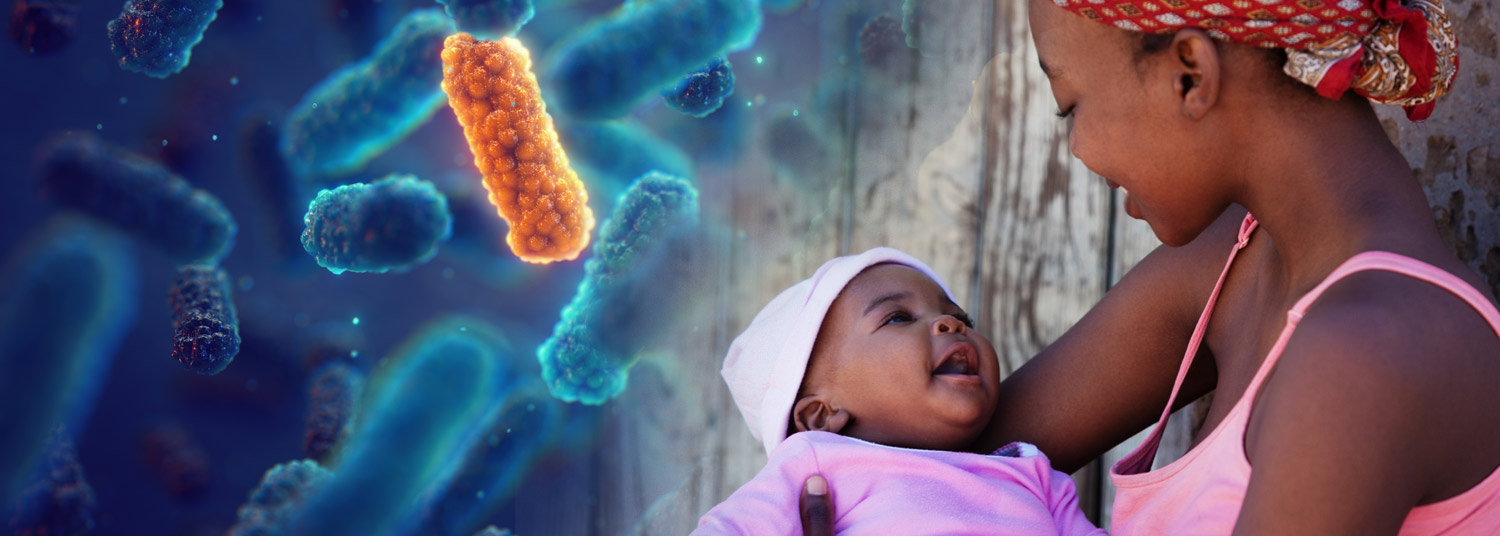
Researchers at the University of Maryland School of Medicine’s Center for Vaccine Development and Global Health (CVD) have completed a successful Phase 1 clinical trial of a novel vaccine designed to protect against both typhoid fever and invasive non-typhoidal Salmonella--two major causes of illness and death among children in sub-Saharan Africa.
Results were published today in the journal Nature Medicine.
 The investigational Trivalent Salmonella Conjugate Vaccine (TSCV) includes sugar molecules taken from the outer coating of the Salmonella typhi bacteria that cause typhoid and the two most common types of invasive Salmonella infections that are not associated with typhoid caused by Salmonella enterica. These sugars are attached to special proteins that help the body recognize and respond to the bacteria more effectively.
In the randomized, placebo-controlled Phase 1 trial, 22 healthy adults in the US received either a low dose (6.25 µg) or high dose (12.5 µg) of TSCV, or a placebo shot. The vaccine was found to be safe and well-tolerated, with only mild, short-lived injection site pain reported. Importantly, 100 percent of the vaccine recipients developed strong immune responses to all three polysaccharide components, while none of the placebo recipients did.
“These results are highly encouraging,” said study lead investigator Wilbur Chen, MD, MS, Professor of Medicine at UM School of Medicine and Chief of the Adult Clinical Studies section within CVD. “They show that TSCV has the potential to protect children in regions where both typhoid and salmonella are endemic and deadly.”
 The vaccine also has the potential to protect Americans against Salmonella infections, one of the leading causes of foodborne illness. Every year, bacteria from raw or undercooked chicken and eggs and contaminated produce cause 1.35 million Salmonella infections in the US and more than 26,000 hospitalizations, according to the Centers for Disease Control and Prevention. The serotypes targeted by the TSCV vaccine are among the most common in US infections.
In fact, some study participants showed pre-existing antibody responses, suggesting prior exposure to the bacteria via foodborne illness. Such priming might have led to stronger and longer-lasting immunity in the adult study volunteers, though researchers remain optimistic about the vaccine’s effectiveness in infants and young children in endemic regions.
 The vaccine triggered a strong and balanced immune response, including long-lasting antibodies—even at lower doses. It also activated a specific immune defense involving white blood cells that help clear infections, which hadn’t been seen before with one of the vaccine’s protein components. These findings suggest the vaccine could offer both gut-level and whole-body protection against Salmonella.
“These findings provide a strong foundation for future studies,” said study co-author Myron Levine, MD, DTPH, professor emeritus at UM School of Medicine and CVD founding director. “We plan to explore broader functional assays to identify correlates of protection and evaluate TSCV’s performance in young children—the population most vulnerable to these diseases.”
The vaccine was developed in collaboration with Bharat Biotech International Limited (BBIL), building on their WHO-prequalified Typbar TCV™ platform.
“In 2017, sub-Saharan Africa saw over 420,000 cases of Salmonella disease and 66,000 deaths, primarily among children,” said Mark T. Gladwin, MD, Dean of the UM School of Medicine. “Typhoid fever caused an additional 650,000 cases and nearly 9,000 deaths in the region. A single vaccine that protects against both could be a game-changer for global pediatric health.”
Contact
Deborah Kotz
dkotz@som.umaryland.edu
Related stories
Wednesday, March 12, 2025
Meningococcal Vaccine Found to be Safe and Effective for Infants in Sub-Saharan Africa
University of Maryland School of Medicine (UMSOM) researchers helped conduct an important new global health study that found a vaccine that protects against five strains of meningitis prevalent in sub-Saharan Africa is safe and effective for use in young children beginning at 9 months of age. This study provided evidence that formed the basis for the World Health Organization’s (WHO) decision last year to recommend the pentavalent Men5CV meningitis vaccine for infants ages 9 months and older.
Thursday, January 25, 2024
Single Dose Typhoid Conjugate Vaccine (TCV) Provides Lasting Efficacy in Children
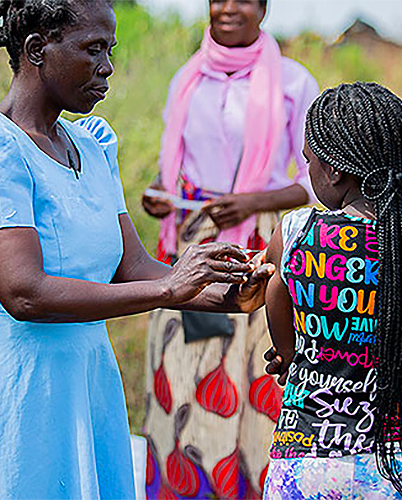
A single dose of the typhoid conjugate vaccine, Typbar TCV, provides lasting efficacy in preventing typhoid fever in children ages 9 months to 12 years old, according to a new study conducted by researchers at University of Maryland School of Medicine’s (UMSOM) Center for Vaccine Development and Global Health (CVD) and led by in-country partners at the Malawi-Liverpool Wellcome Trust (MLW) Clinical Research Programme.

Monday, October 02, 2023
UM School of Medicine Researchers Present Interim Results on Meningococcal Vaccine for Infants and Young Children in Africa
University of Maryland School of Medicine (UMSOM) researchers, as part of the Infectious Diseases Clinical Research Consortium (IDCRC), provided an interim analysis showing that the pentavalent (NmCV-5) meningitis vaccine is safe for use in 9-month-old infants in the meningitis belt of sub-Saharan Africa. They presented their results to the World Health Organization’s (WHO) Strategic Advisory Group of Experts (SAGE) on Immunization on September 26.
Thursday, March 24, 2022
UM School of Medicine Leads Research to Assess Meningococcal Vaccine for Infants and Young Children in Africa
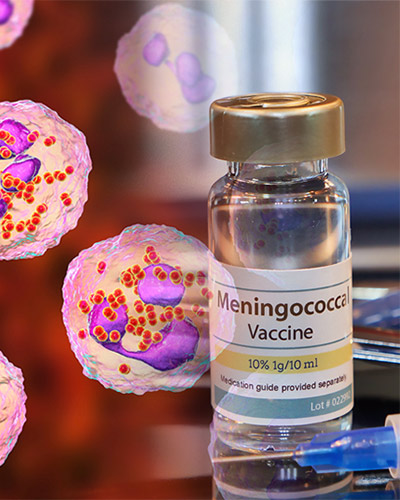
Researchers at the University of Maryland School of Medicine (UMSOM)’s Center for Vaccine Development & Global Health (CVD) are leading a study to evaluate the use of a pentavalent – or five in one – meningococcal conjugate vaccine (NmCV-5) among infants and young children in the meningitis belt of sub-Saharan Africa. This is the final and pivotal study for World Health Organization (WHO) prequalification of this vaccine, which is the last stage to make the vaccine available for low- and middle-income countries.
Wednesday, January 27, 2021
Dr. Wilbur Chen, Nationally-Recognized Vaccine Researcher, Selected for Federal Committee that Guides Immunization Policies
Wilbur H. Chen, MD, MS, FIDSA, FACP, Professor of Medicine at the University of Maryland School of Medicine (UMSOM), has been named a new voting member of the federal government’s Advisory Committee on Immunization Practices (ACIP), the prestigious board of experts that makes recommendations on the safe use of vaccines for Americans. The U.S. Department of Health and Human Services selected Dr. Chen for the 15-member advisory committee based on his expertise and national leadership in vaccinology, infectious diseases, public health, and preventive medicine. He will remain in his current role at UMSOM while he serves in his four-year term, which began last month.
Tuesday, December 10, 2019
UMSOM Researchers to Test Vaccine Designed to Protect Against Serious Illness from Contaminated Food and Water
Each year, millions of people contract serious diarrheal illnesses typically from contaminated food and water. Among the biggest causes of diarrheal diseases are the bacteria Shigella and enterotoxigenic Escherichia coli (ETEC), and researchers at the University of Maryland School of Medicine are testing a vaccine designed to offer protection against these serious pathogens.

Tuesday, March 20, 2018
UMSOM Vaccine Experts Lead Trial on Avian Flu Vaccine
Vaccine experts at the University of Maryland School of Medicine (UMSOM) have begun multiple clinical trials of vaccines designed to protect against H7N9, an avian influenza virus that was first reported in humans in 2013 in China.
Friday, February 23, 2018
UMSOM Vaccine Expert Highlights Need for Vaccination Among Older Adults During Capitol Hill Briefing
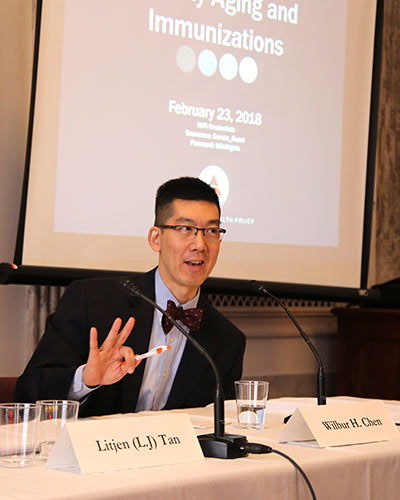
Today at a briefing on Capitol Hill, Wilbur Chen, MD, MS, Associate Professor of Medicine at the University of Maryland School of Medicine, warned that the U.S. population of adults 65 and older is expected to rise significantly over the next few decades, making vaccinations against diseases like influenza, pneumonia and shingles for this population very critical.