

Training and Support
 BCORE offers ongoing training and support to help Goldie users navigate the platform and incorporate it into their workflows.
-
Goldie End User Guide
The Goldie End User Guide provides step-by-step instructions for navigating the platform, managing client information, making and receiving referrals, documenting services, and communicating with partner organizations.
Access the Goldie End User Guide
-
Virtual Office Hours
Every Tuesday from 12:00–1:00 p.m.
Goldie users may join to ask questions, receive technical assistance, troubleshoot challenges, or obtain additional guidance.
(link) Join Virtual Office Hours
- Goldie Training Sessions
Second and fourth Thursday of each month from 9:30–11:00 a.m.
Training is available for newly onboarded users and current users seeking a refresher.
-
Register for a Training Session
Goldie training is held the 1st and 3rd Thursday of each month from 9:30am-11am. Send an email to lakeisha.mixon@som.umaryland.edu to register.
Partner Roundtable
The Goldie Partner Roundtable brings participating organizations together each month to strengthen relationships, improve coordination, and support the continued development of the Goldie network.
 Roundtable meetings provide partners with an opportunity to:
- Share updates about their programs, services, and referral capacity
- Discuss how Goldie is being used across different care settings
- Identify barriers affecting referrals and continuity of care
- Exchange promising practices and learn from one another
- Provide feedback on Goldie features, workflows, training, and technical support
- Build connections with hospitals, addiction treatment providers, and community-based organizations across Baltimore
Goldie’s early partners play an essential role in shaping the platform and the broader partnership model. Their experiences help identify how Goldie can better support care coordination and how BCORE can strengthen its support for participating organizations.
Feedback from the Partner Roundtable is shared with the Goldie development team and informs platform improvements, partner training, technical assistance, and future network expansion.
The Partner Roundtable is held virtually on the last Thursday of each month from 1:00–2:30 p.m., with an in-person meeting offered quarterly.
Success Stories
Goldie’s impact can be seen in the everyday moments when organizations connect more quickly, staff coordinate more effectively, and people receive services in settings where they feel comfortable. The following examples were shared by partners during an early Goldie Partner Roundtable.
Meeting People Where They Feel Comfortable
Charm City Care Connection and People Encouraging People described how Goldie supported real-time coordination between their teams. Using the platform’s referral and chat functions, staff could exchange updates, see when referrals were received, and coordinate services as needs emerged.
People Encouraging People staff also met participants at Charm City Care Connection, a familiar and trusted community setting. Charm City Care Connection reported that participants began returning because they knew the team would be there and felt that their needs were being addressed.
This collaboration demonstrates how Goldie can help organizations work across traditional boundaries while allowing people to receive support in places where they already feel connected.
 Making Documentation Easier
Charm City Care Connection also used Goldie to document a wound-care encounter. Staff reported that the process was easier than their existing documentation system and identified an opportunity to consolidate more of their wound-care documentation within Goldie.
Although this example did not involve a referral, it illustrates how Goldie can support frontline staff by simplifying documentation and keeping important information in one secure, accessible location.
These early successes demonstrate what becomes possible when organizations share both a commitment to collaboration and a tool that supports it. As the Goldie network grows, BCORE will continue highlighting how partners are improving access, strengthening follow-up, and helping people remain connected to care and support.
Become A Partner
Become a Goldie Partner – Free of charge to Baltimore City organizations
Strong care coordination begins with strong partnerships. BCORE is continuing to expand the Goldie network of hospitals, addiction treatment providers, behavioral health organizations, harm reduction programs, recovery services, and community-based organizations serving people with opioid and other substance use disorders.
As a Goldie partner, your organization can:
- Send referrals and, when applicable, receive referrals for your programs and services
- Communicate securely with hospitals, treatment providers, and community organizations
- Coordinate services and follow-up across the continuum of care
- Help individuals connect with medical, behavioral health, recovery, and social support services
- Participate in the Goldie Partner Roundtable and build relationships across the network
- Share feedback that informs platform improvements, training, and partner support
What to Expect
Participation begins with a conversation. The BCORE team will meet with your organization to learn about your services, referral pathways, current workflows, and care coordination needs. If Goldie is a good fit, BCORE will guide your organization through the participation agreement, platform setup, staff training, and implementation process.
Organizations do not need to both send and receive referrals to participate. Goldie can support different models, including hospitals that primarily connect patients to community services and organizations that both make and receive referrals.
Interested in learning how Goldie could support your organization and the people you serve? Standing virtual demonstrations are held on the fourth Wednesday of each month from 11:00 a.m.–12:00 p.m. Join us to see Goldie in action, learn how participating organizations use the platform, and ask questions.
Attend a Goldie Demonstration
Goldie demonstrations are held on the 4th Wednesday of each month from 11:00am – 12:00pm. Send an email to lakeisha.mixon@som.umaryland.edu to register.
If you are unable to attend a scheduled demonstration, complete our short interest form, and a member of the BCORE team will follow up with you. The form requests your organization’s name, primary contact, services provided, populations served, referral capabilities, and reason for interest.
Submit the Goldie Partner Interest Form

Provider Resources
Increasing access to medications for opioid use disorder is a core component of BCORE’s work. This page provides practical training, clinical tools, and prescribing support for emergency department clinicians and other healthcare providers caring for individuals with opioid use disorder. Whether you are beginning to prescribe MOUD, strengthening an existing clinical workflow, or seeking assistance with a specific patient, these resources can help you take the next step.
Training
Access educational opportunities designed to strengthen provider knowledge and confidence in identifying and treating opioid use disorder.
Training topics include:
 Understanding opioid use disorder and available medications
- Identifying appropriate patients for MOUD
- Initiating buprenorphine in the emergency department
- Managing opioid withdrawal in the fentanyl era
- Recognizing and responding to precipitated withdrawal
- Using patient-centered and stigma-free communication
- Planning discharge, follow-up, and connection to ongoing treatment
- Incorporating MOUD into emergency department workflows
Explore MOUD Training Opportunities
Clinical Guides and Tools
Use practical, evidence-based tools to support clinical decision-making at the point of care.
Resources include:
- Buprenorphine initiation guidance
- Clinical Opiate Withdrawal Scale resources
- Emergency department treatment pathways
- Guidance for initiating buprenorphine following naloxone administration
- Discharge and bridge-prescription tools
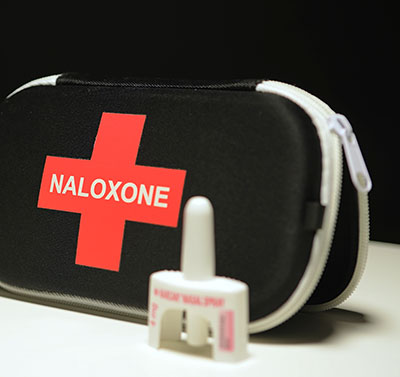
- Naloxone prescribing and overdose-prevention resources
- Patient education materials
- Referral and follow-up guidance
View Clinical Guides and Tools
FAQs
 Find answers to common questions from providers who are considering or beginning to prescribe MOUD.
Who can prescribe buprenorphine?
Practitioners with a current DEA registration that includes Schedule III prescribing authority may prescribe buprenorphine for opioid use disorder, consistent with state law and their scope of practice.
Is a special waiver required?
No. The federal X-waiver requirement was eliminated in December 2022. Separate DEA training requirements still apply. [Learn more.](https://www.marylandmacs.org/mat--mate-acts/expanding-access-to-buprenorphine/)
When can buprenorphine be initiated in the emergency department?
Buprenorphine can be initiated when a patient with opioid use disorder agrees to treatment and clinical assessment supports an appropriate initiation approach. Providers should follow their hospital’s protocol. [Explore clinical resources.](https://www.marylandmacs.org/resources/moud-overview/)
Does the patient need to be in withdrawal?
Standard initiation generally requires clear signs of opioid withdrawal. Alternative low-dose approaches may begin without significant withdrawal but require a different protocol. [Learn about initiation approaches.](https://www.marylandmacs.org/media/som/microsites/macs/documents/Precipitated-Withdrawl-and-Buprenorphine-Induction.pdf)
How does fentanyl exposure affect initiation?
Fentanyl exposure can complicate initiation and increase the risk of precipitated withdrawal. Timing should be guided by clinical assessment and the selected protocol, rather than time since last use alone. [Learn more.](https://www.marylandmacs.org/resources/moud-overview/)
What is precipitated withdrawal, and how should it be managed?
Precipitated withdrawal is a sudden onset or worsening of withdrawal after buprenorphine administration. Management may include additional buprenorphine, medications for symptom relief, and monitoring, guided by clinical assessment and consultation when needed. [View MACS guidance.](https://www.marylandmacs.org/media/som/microsites/macs/documents/Precipitated-Withdrawl-and-Buprenorphine-Induction.pdf)
What should be included in the discharge plan?
Include clear medication instructions, a buprenorphine prescription when appropriate to bridge to follow-up, naloxone and overdose-prevention education, and a timely connection to continued treatment.
How can patients be connected to continued treatment?
Arrange a follow-up appointment or warm handoff to an ongoing treatment provider whenever possible. Peer support professionals and care coordination teams can help address barriers and support engagement.
Where can providers obtain clinical support?
The Maryland Addiction Consultation Service (MACS) offers free clinical consultation and referral support at **1-855-337-MACS (6227)**, Monday–Friday, **9 a.m.–5 p.m.** MACS is a non-emergency warmline; consultation requests are returned within one business day. [Request consultation.](https://www.marylandmacs.org/consultation/)
View Prescribing FAQs
Need Immediate Support?
 Whether you need expert guidance related to substance use disorder treatment and prescribing or immediate clinical support for a patient who needs MOUD, help is available.
-
Maryland Addiction Consultation Service (MACS)
MACS supports prescribers and their practices, pharmacists, and healthcare teams in addressing the needs of patients with substance use disorders and chronic pain. Providers can access consultation, guidance, training, and other resources related to treatment and prescribing.
To request a consultation, call 1-855-337-MACS (6227), email MACS@som.umaryland.edu or submit a request on the MACS website
MACS Materials and Fact Sheets
-
BCORE Telemedicine Access Line
The BCORE Telemedicine Access Line provides real-time support to and patients when additional assistance initiating MOUD is needed. The line can connect an eligible patient with a clinician for a telemedicine evaluation and, when clinically appropriate, a bridge prescription. The team can also help coordinate ongoing treatment and address barriers affecting access to care.
Available Monday – Friday, 8:00 a.m. – 9:00 p.m.
Contact the Telemedicine Access Line 1 (877) 239-CARE (2273)
(SAMHSA provides a Buprenorphine Quick Start Guide; ACEP has ED-specific tools; PCSS-MOUD provides training and implementation support; and Maryland MACS offers prescriber consultation).