
Studying Ophthalmology at UMSOM
The educational programs of the Department of Ophthalmology and Visual Sciences encompass a broad range of target groups. From students to practicing ophthalmologists and physicians, the Department continually strives to meet the specific needs of each of these groups.
Medical Students
First Year
Ophthalmic education for medical students occurs during all four years of training. In the first year, students receive instruction on retinal physiology and visual function. Additional instruction in gross anatomy is provided to students by Ophthalmic residents and faculty, to give medical students a "feel" for the close associations of anatomic structure with possible diseases that can occur.
Second Year
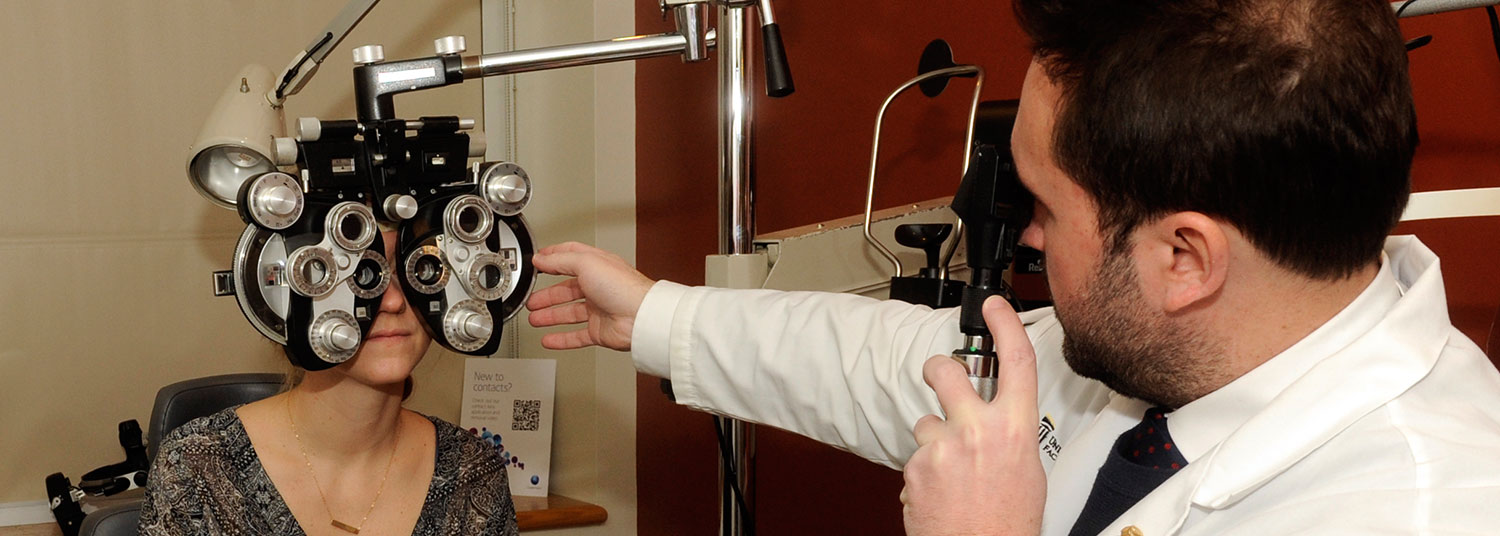
During the second year, ophthalmology faculty lecture to the students in the Physical Diagnosis and Pharmacology and Therapeutics courses. In addition, they provide hands-on practical instruction on how to perform a basic eye examination during small-group teaching sessions. These sessions are very popular with the students.
Third Year
In the third year, students are given instruction on basic eye examination techniques in the eye clinic, to reinforce their previous knowledge, and are also given three didactic lectures concerning diseases that they are likely to encounter.
Fourth Year
Fourth-year students have the opportunity to participate in clinical ophthalmology, in both inpatient and outpatient settings, during a month-long elective on the Ophthalmology service (OPHTH-541-01). The inpatient and outpatient experiences are derived from this rotation, with small-group bedside rounds held on a weekly basis. Approximately 20 students take this elective each year, including several visiting students from other institutions.
The month also includes a balanced schedule of didactic lectures, surgery, ambulatory ophthalmology, inpatient consults, and some call coverage. These sessions are directed by senior residents and supervised by a faculty member, as well as by contributions from over 20 volunteer faculty. At the end of the rotation, students are expected to perform an oral presentation to receive an honors grade. Course evaluations from students taking the basic rotation have been overwhelmingly positive.
Additionally, month-long research rotations with various faculty, as well as the ability to participate in one of the few centers in the country that utilize electrophysiological techniques as part of an extended interaction with the different clinical departments, are possible.
 Ophthalmology Residency
Our Ophthalmology Residency Program consists of a total of nine residents who undergo three years of clinical training in Ophthalmology, sponsored by the University of Maryland Medical Center. A major portion of residents' time is spent at UMMC, which includes the faculty practice located in the University of Maryland Professional Building, the University of Maryland Hospital, and the Shock Trauma Center. The Baltimore Veterans Administration Medical Center and the Wilmington, Delaware, Veterans Administration Medical Center comprise the affiliated hospitals.
Learn More: Ophthalmology Residency
Cornea and External Disease Fellowship
The Cornea and External Disease Fellowship at the University of Maryland School of Medicine is a one-year clinical fellowship designed to train the individual to successfully manage a referral cornea practice in an academic or private setting. Fellows will gain expertise in the surgical management of keratoplasty and other anterior segment procedures, along with the medical aspects of a broad spectrum of corneal diseases.
Learn More: Cornea & External Disease Fellowship
Optometry Interns
The Department participates as a clinical externship site for the New England College of Optometry and the Pennsylvania College of Optometry. The final year optometry externs have the opportunity to work in the clinical setting with their optometry attendings as well as rotate with the ophthalmology faculty in this 12-week externship program.
Optometry externs are expected to attend weekly ophthalmology grand rounds, participate in the weekly optometry research journal club, and give an oral presentation at the end of their rotation to receive final grades for the rotation. The externs are evaluated by the optometry externship director.